


Key Takeaways
- Personal care churns out more than 18 billion pounds of plastic waste a year, and most of it lands in a landfill.
- Sensitive skin reacts faster to deodorant because its barrier is thinner and quicker to inflame than normal skin.
- Aluminum compounds, parabens, and phthalates are the usual suspects behind reactions in reactive skin.
- Baking soda's high pH throws off sensitive underarm skin — that's the burning, chafed feeling so many people describe.
- The Elemental formula runs on just nine ingredients: aluminum-free, paraben-free, and no baking soda by design.
- Phthalates hide inside synthetic fragrance blends, and they're one of the most common triggers of underarm irritation.
- Switching to a cleaner, baking-soda-free refill often calms skin down fast, because you've pulled out the ingredients driving the inflammation.
Why Biodegradable Refills Actually Reduce Waste
Conventional single-use deodorant sticks are a quiet contributor to the plastic problem. Most of those containers are made from mixed plastics that recycling facilities can't process, so they get tossed. Biodegradable refills go after this directly. Swap the single-use plastic housing for compostable or easily recyclable materials, and the habit shifts from throwing things away to keeping things in use.
What Sensitive Skin Actually Needs From a Deodorant
Underarm skin is exposed. Constant friction, shaving, no airflow — the area is a prime spot for contact dermatitis. When you get redness, stinging, or itchy patches after applying deodorant, you're usually reacting to the synthetic additives meant to block sweat glands or cover odor.
The Elemental formula works the other direction. Sweat itself is odorless until it meets the bacteria on your skin. So instead of building a harsh chemical wall, you target the bacteria with gentle, skin-compatible ingredients.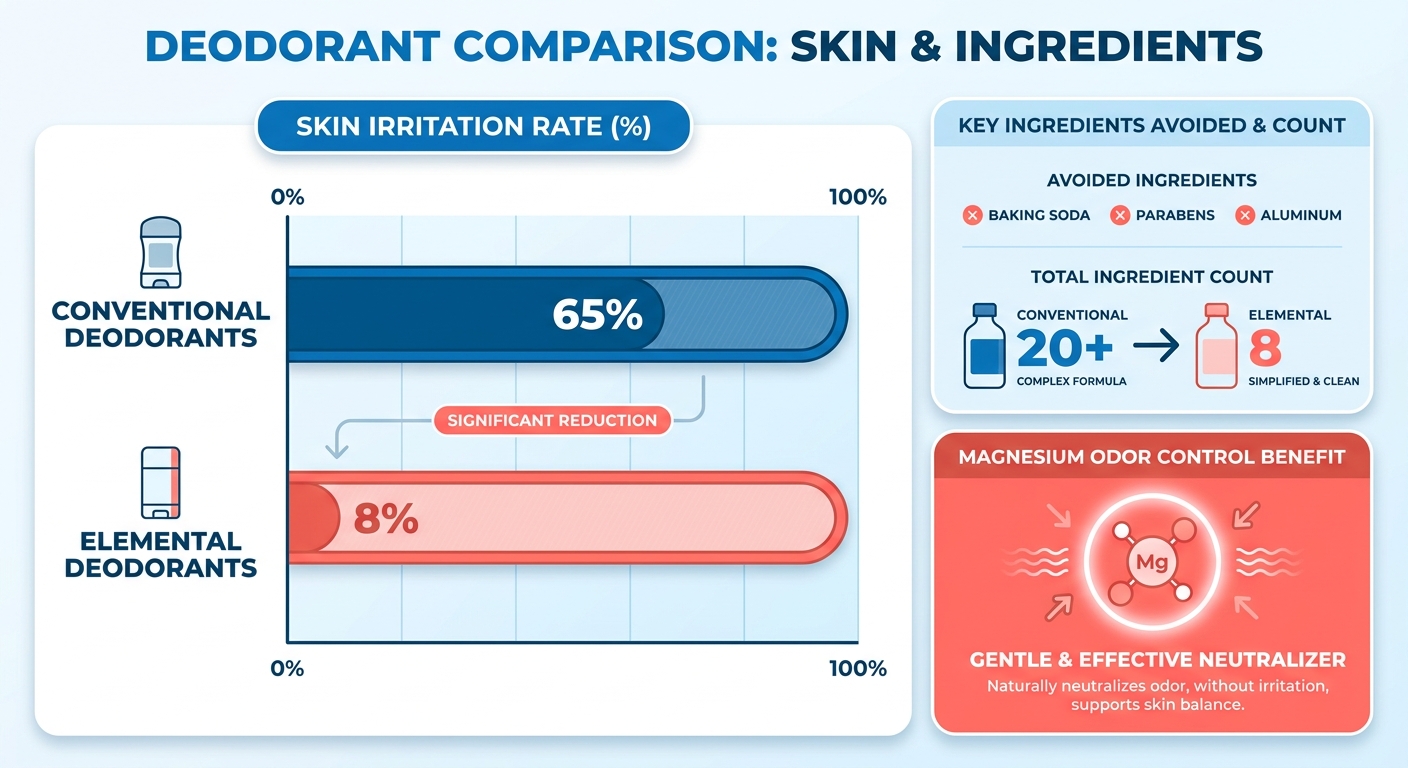
The Ingredients That Set Off Reactive Skin
To see why conventional deodorants irritate, look at how the active ingredients meet your biology. Aluminum salts form a physical gel plug inside your sweat ducts. That temporary blockage can cause localized inflammation and folliculitis. Parabens do their job preventing microbial growth in water-based formulas, but they frequently trigger delayed hypersensitivity reactions. Synthetic fragrance is its own headache — proprietary scent blends often carry undisclosed plasticizers to make the scent hang around longer.
Baking soda is a different animal. It sits at a highly alkaline pH around 8.3. Your skin's acid mantle sits slightly acidic, around 5.5. That gap strips essential lipids out of the skin barrier, and you end up with micro-tears and what feels like a chemical burn. Magnesium hydroxide is the workaround. It carries a lower pH than baking soda, so it neutralizes odor-causing acids without wrecking the barrier.
Matching a Refill to Your Skin
Pick the refill that fits your dermatological profile, not the one with the nicest label. If you've got a history of eczema or contact allergies, start with an unscented, baking-soda-free base. Once your skin builds tolerance, you can move to scented options.
If you want a scent, look for formulas built on steam-distilled essential oils rather than synthetic perfume. Our AIR refill is completely fragrance-free; NUR uses organic essential oils for a subtle, natural scent. Both lean on nourishing botanical bases like coconut oil, vegetable glycerin, and witch hazel to soothe the barrier instead of stressing it.
One thing to plan for: your body needs a short transition. Two to four weeks is standard while your sweat glands adjust to a natural formula.
The Reuse Is the Point, Not the Compost Label
Most people assume the "biodegradable" tag is where the environmental win lives. It isn't. Reusing the durable case is what actually cuts the footprint — and almost nobody explains that distinction clearly.
A refillable design can cut plastic waste by up to 70%, but only if you keep the case and swap the refills. A compostable refill sitting inside a case you throw out after one use fixes almost nothing.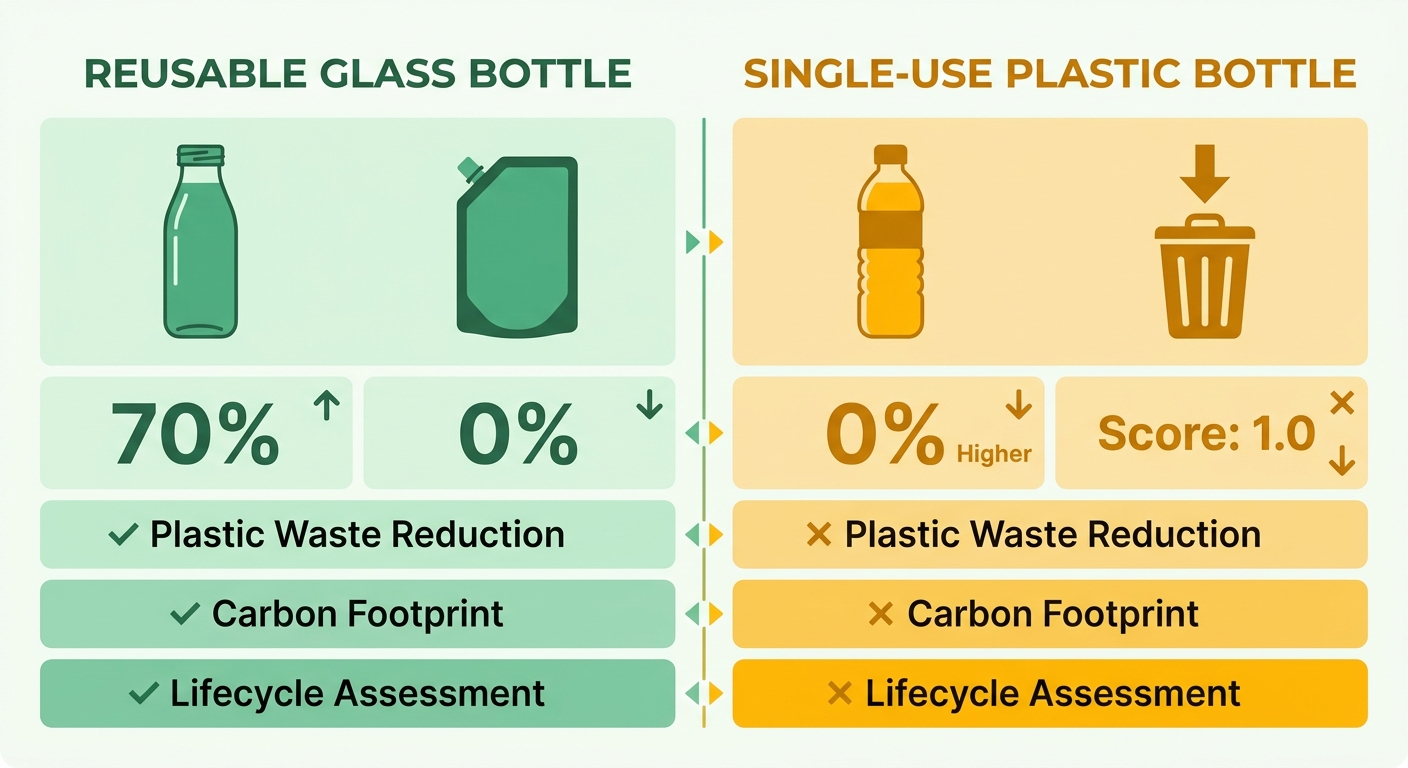
Where the Payoff Actually Comes From
Read two life cycle assessments side by side and it gets clear. A multi-attribute LCA on cosmetic packaging found that conventional polypropylene had the lowest environmental impacts in most scenarios, and that switching to 100% recycled materials cut overall impact by 42-60%.
Sounds like an argument against biodegradable refills. It isn't, once you factor in behavior. A separate analysis of a portable cosmetic package found that material extraction drives energy use, while the carrying and use phase drives global warming potential. Disposal barely registers.
"Lowest-impact material" and "most sustainable system" are two different questions. A single-use PP stick looks efficient in isolation. But every replacement means a fresh round of extraction. A durable case reused ten times skips nine of those rounds. The reuse is the lever, not the compostable label.
How Long-Lasting Formulas Stack the Savings
Longer-lasting refills mean fewer replacement cycles, and that stacks on top of the packaging savings. Natural deodorants can last up to 3 months per refill, according to Kathryn Kellogg's tested reviews. Fewer purchases, less extraction, less manufacturing over a year.
So case durability and formula longevity reinforce each other. A refill you replace four times a year beats one you replace monthly. Both are pulling the footprint down at once.
The wider market is moving this way for a reason. The global deodorant market is expected to hit $30.76 billion by 2026, and refillable systems are spreading fast. As beauty analyst Kelly Kovack put it:
"Refillable deodorant may finally be reaching a tipping point." - Kelly Kovack
When a Refillable System Isn't Worth It
Skip it if you won't commit to reusing the case. The whole model breaks the second the durable component hits the trash. If you know you'll toss the case at the first inconvenience, a simple recyclable stick is honestly the more sensible pick.
Convenience matters here too. Subscription refills that arrive on a schedule remove the friction that makes people quit. When refills show up before you run out, reuse becomes the default instead of a chore.
And the impact reaches past your bathroom shelf. Product packaging makes up 33% of U.S. household waste and 40% of global plastic use, per a life cycle study. Cut the replacement cycle on a daily-use item, and those numbers move the right way. For a deeper look at the plastic side, this guide on the benefits of plastic-free deodorant is worth a read.
Making the Switch, Step by Step
Switching to biodegradable refills is easier than most people expect. Match a refill to your skin type and scent preference, transition gradually so your skin can adjust, give the new formula a few weeks, and use a risk-free window to test it without pressure.
Try a natural deodorant that actually works
Experience 24-hour odor protection with Elemental Deodorant. Made with organic ingredients, it's aluminum-free, vegan, and eco-friendly. Gentle on your skin and the planet.
Shop ElementalThe infrastructure has caught up, too. Refillable systems have moved from niche online experiments to mainstream retail — automated subscriptions and in-store refill stations are now common at major retailers. Keeping a sustainable routine going takes almost no effort now.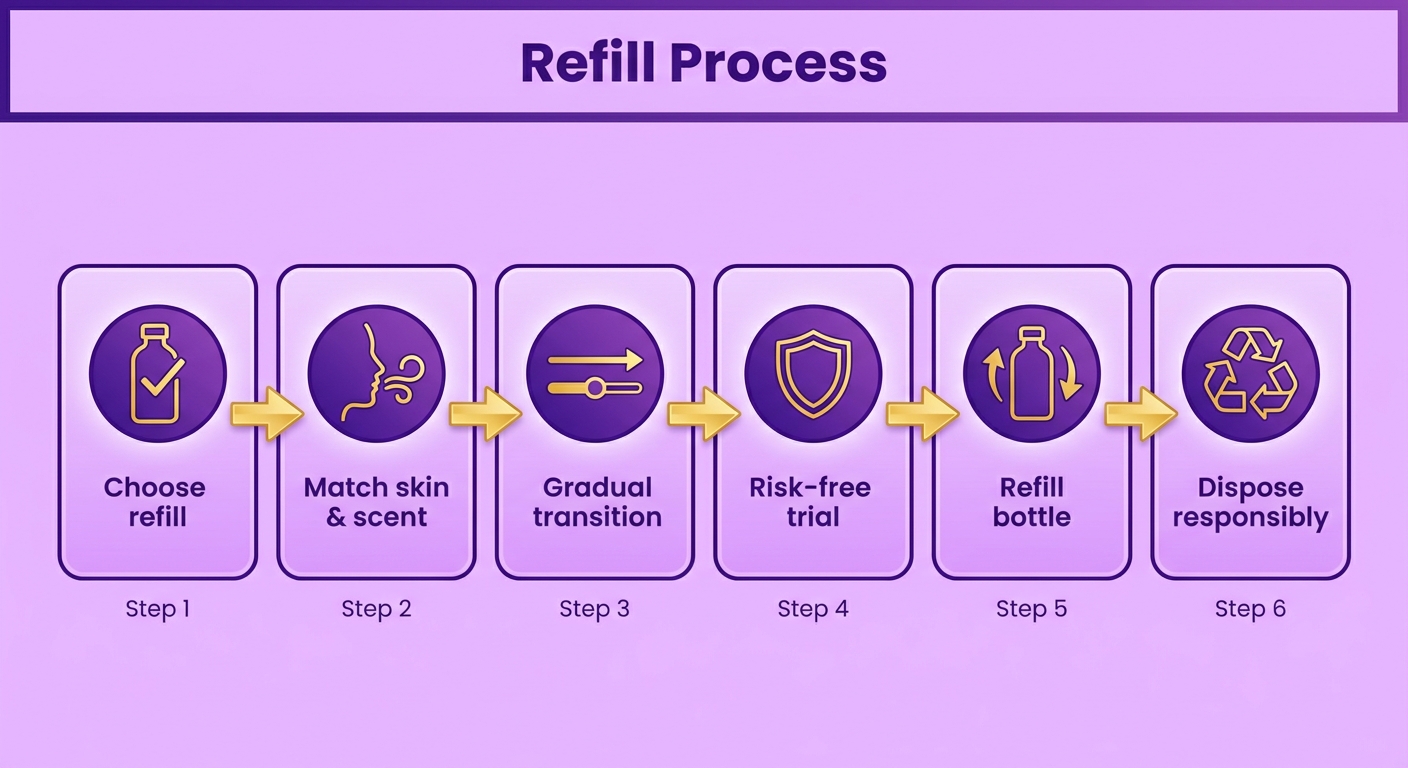
What the Cartridge Is Made Of Matters
The formula gets all the attention, but the cartridge material carries just as much weight. The better designs use agricultural byproducts like waste sugarcane pulp and plant-based bioplastics. Same structural integrity as traditional plastics, but they break down safely in composting conditions.
These plant-based cartridges are built to handle bathroom moisture without degrading early, so your formula stays protected for three months or longer in active use. Choose one of these biomaterial refills and the housing leaves no microplastics behind once it's empty. That closes the loop.
Transitioning Without the Irritation
Go gradually. Apply the new refill every other day for the first week, alternating with your old deodorant if you need to. That gives your skin time to adjust while your body clears out residue from aluminum-based products.
Expect an adjustment period. Some people notice more odor or moisture for a week or two as sweat glands unblock. That's normal, and it passes. If redness or stinging hangs on past three weeks, that's your signal to see a dermatologist about the specific ingredient triggering it.
One honest carve-out: if you have a diagnosed skin condition like eczema, don't self-experiment through a flare. Get a professional read on which ingredients to avoid first, then pick your refill accordingly.
Does a Risk-Free Guarantee Actually Help?
It does. A trial window removes the main barrier to switching: the financial risk of buying something your skin might reject. Our 30-day risk-free guarantee is built to cover the whole biological transition, so your sweat production can stabilize before you decide.
That extra time matters, because judging a natural formula during the first week of detox tells you almost nothing about how it performs long-term. If you're still weighing packaging formats, guides on plastic-free deodorant can help you compare glass jars, cardboard tubes, and refillable cases side by side.
What I'd Actually Recommend
The move to a circular routine changes how we judge environmental responsibility. Stop obsessing over end-of-life disposal and look at the entire lifecycle instead. The cosmetic packaging LCA makes one thing clear: material selection alone doesn't guarantee sustainability. Treat packaging as a disposable commodity and even the most efficient materials fail to dent the ongoing demand for raw resources.
Real progress comes from swapping the linear take-make-waste model for a closed loop. Separate the durable housing from the consumable formula, and refillable systems reset the baseline for daily-use items.
The Shipping Math Nobody Mentions
Look at the wider supply chain and the refill model picks up another advantage. The portable-package life cycle analysis shows that shipping and distribution impacts ride heavily on the weight and volume of the cargo. Traditional deodorants ship a heavy plastic case, full of product, every single time.
Refills are light and compact. That lets logistics networks move more units per shipment, which drops transportation emissions per user. Skip the heavy outer packaging and you've cut the carbon footprint before the product ever reaches your bathroom.
Why the Formula and the Case Reinforce Each Other
A long-lasting formula and a durable case are where this system peaks. A concentrated, slow-wearing natural formula stretches the time between purchases. That slow burn amplifies the benefit of the reusable case.
Spread the environmental cost of the durable case over years of use and its net impact drops hard. One case reused dozens of times thins its manufacturing footprint until the per-use impact is negligible. That compounding is why formula quality and hardware durability have to be designed together.
Making the Switch Worth It
Buy the case once, refill it, keep refilling. That's where the payoff lives. Swap cases every month, biodegradable or not, and you've missed the point.
The global cosmetic packaging market is on track to hit EUR 51 billion by 2032, per the same LCA research. That's a lot of packaging headed somewhere. Your refill habit is a small, repeatable vote against the disposable default, and it's one of the easier sustainable swaps to actually stick with.
So commit to the reuse, not just the material. That's the switch that counts.
References
[1] deodorant disruption 2.0 – refill, reuse, repeat - https://beautymatter.com/articles/deodorant-disruption-20-refill-reuse-repeat
[2] The BEST All Natural Deodorants: 18 Brands that Actually Work - https://www.goingzerowaste.com/blog/the-best-all-natural-deodorants-18-brands-that-actually-work/
[3] Reducing the Environmental Impacts of Plastic Cosmetic ... - https://www.researchgate.net/publication/378584586_Reducing_the_Environmental_Impacts_of_Plastic_Cosmetic_Packaging_A_Multi-Attribute_Life_Cycle_Assessment
[4] (PDF) Life cycle analysis of a portable cosmetic package - https://www.researchgate.net/publication/316578477_Life_cycle_analysis_of_a_portable_cosmetic_package
Frequently Asked Questions
1. Can natural deodorant handle heavy sweating during workouts?
Natural deodorants control odor but don't block sweat like aluminum antiperspirants do, so you'll still feel moisture during intense exercise. Magnesium hydroxide neutralizes odor-causing bacteria rather than plugging glands. Reapplying after a workout helps. Expect more dampness than antiperspirants, which is the tradeoff for avoiding gland-blocking compounds.
2. What's the difference between a deodorant and an antiperspirant?
Deodorants neutralize or mask odor-causing bacteria, while antiperspirants use aluminum compounds to plug sweat glands and reduce wetness. Aluminum-free formulas like Elemental are technically deodorants, so they manage smell without stopping perspiration. If you specifically need to stay dry, no aluminum-free product blocks sweat the way antiperspirants do.
3. Can I compost biodegradable deodorant refills at home?
Home composting depends entirely on the specific materials used in the refill packaging and your local waste infrastructure. Many certified compostable refills require the high, consistent heat of an industrial composting facility to break down efficiently and may remain intact for a long time in a standard backyard bin. Always check the packaging for specific certifications like BPI or TUV OK Compost. If industrial composting isn't available in your area, some brands design their refills to be fully paper-recyclable instead.
4. Is aluminum-free deodorant safe to use during pregnancy?
Aluminum-free, paraben-free, and phthalate-free formulas are generally considered gentle choices during pregnancy, since they skip the compounds people most often want to avoid. Hormonal shifts can make skin more reactive, though, so patch-test first and consult your doctor with any concerns. This is a general starting point, not medical advice.
5. How should I store deodorant refills to keep them fresh?
Store your refills in a cool, dry place away from direct sunlight and humidity. Because natural formulas rely on plant-based waxes and oils like coconut oil or shea butter, they are sensitive to temperature fluctuations and can soften if left in a steamy bathroom. Keeping them in a drawer or linen closet ensures they maintain their structural integrity and active potency until you are ready to load them into your case.
6. Why do I smell more when I first switch to natural deodorant?
When you stop using aluminum-based antiperspirants, your sweat glands are finally able to clear out accumulated cosmetic residue. During this initial phase, the sudden increase in moisture can cause a temporary surge in underarm bacteria, which leads to a more noticeable odor. This is a normal physiological rebalancing process as your skin's microbiome adjusts. Drinking plenty of water, wearing breathable natural fibers, and washing thoroughly will help manage this temporary phase until your skin chemistry stabilizes.
7. Are natural deodorant refills more expensive than regular deodorant?
While the initial purchase of a refillable system carries a higher upfront cost due to the durable case, it quickly becomes highly cost-effective. Consumable refills are priced significantly lower than fully packaged, single-use deodorants because you aren't paying for a new plastic mechanism and outer shell with every purchase. Over the course of a year, the cumulative savings on refills make the system more economical than continuously buying standard drugstore sticks.