


Plastic deodorant tubes pile up fast - about 550 million are thrown away each year, with each one lasting centuries in landfills. If you're tired of tossing out empty sticks, refillable deodorant offers a different path. Instead of replacing the whole container, you keep a durable case and swap in smaller refills. This approach uses less material, cuts down on waste, and can save money over time. But is it worth the switch? Here’s how refillable systems stack up against single-use options in waste, cost, and ease of use, so you can decide what fits your routine.
Refillable Deodorant Packaging
How Refillable Systems Work
Refillable deodorant systems combine a sturdy, reusable outer case with replaceable inner refills. These cases are typically crafted from materials like aluminum, stainless steel, or glass, designed to last for years.
The refills come in various formats, such as solid cartridges that fit into the case like a standard deodorant stick, paper-wrapped balms encased in kraft paper or cardboard, and liquid pouches for pouring into reusable bottles. Each format uses a unique connection system - screw-in, snap-in, or push-up. Screw-in mechanisms are especially reliable for travel, staying secure even with vibrations or temperature shifts [2]. These thoughtful designs not only ensure durability but also cut down significantly on packaging waste.
Impact on Packaging Waste
Refillable systems bring clear environmental advantages. On average, a deodorant refill uses about 80% less material than a single-use product [8][9]. Over two years, using six refills annually, a single refillable case can replace approximately 12 disposable plastic containers. This switch also saves an estimated 2.7 kg of CO2 from packaging production alone [7][9].
The benefits go beyond material reduction. Refill cartridges are lighter and more compact than full deodorant containers, which reduces transportation weight and fuel usage. Since the outer case doesn’t need frequent replacement, its overall environmental footprint remains much smaller compared to disposable alternatives.
Upfront Cost vs. Long-Term Savings
While refillable systems involve a higher initial cost - durable cases typically range from $15 to $35 compared to $5 to $15 for a standard deodorant - the long-term savings quickly add up.
Refill cartridges are usually 30% to 40% cheaper than buying a whole new product. Most users recoup their initial investment after just three to four refills, or roughly six to eight months of use [7][9]. Beyond that, each refill represents ongoing savings, with annual costs dropping by about 15% to 25% compared to single-use products. Subscription models can stretch these savings even further, often offering up to 25% off recurring refill deliveries [10].
"Refillable is one of the few packaging formats where repeat purchases cost less for both the brand and the customer." [2] - Packaging consultant Sunny Wan
This cost efficiency makes refillable systems an appealing and practical choice for everyday use.
Day-to-Day Usability
Refillable deodorants are straightforward to use. Reloading takes only seconds, whether you’re inserting a cartridge, snapping a refill into place, or pouring liquid into a bottle. The reusable cases are generally more satisfying to handle than plastic tubes, offering a heavier, sturdier feel and better resistance to cracking or warping.
High-quality aluminum and glass cases are built to last between 2 and 10 years [7][9], eliminating the need to replace the entire product frequently. Screw-in refills are particularly convenient for travel, as they stay securely fastened. The main adjustment for users is remembering to reorder refills before running out - a task made easier with subscription services.
Elemental Deodorant's Refillable Approach
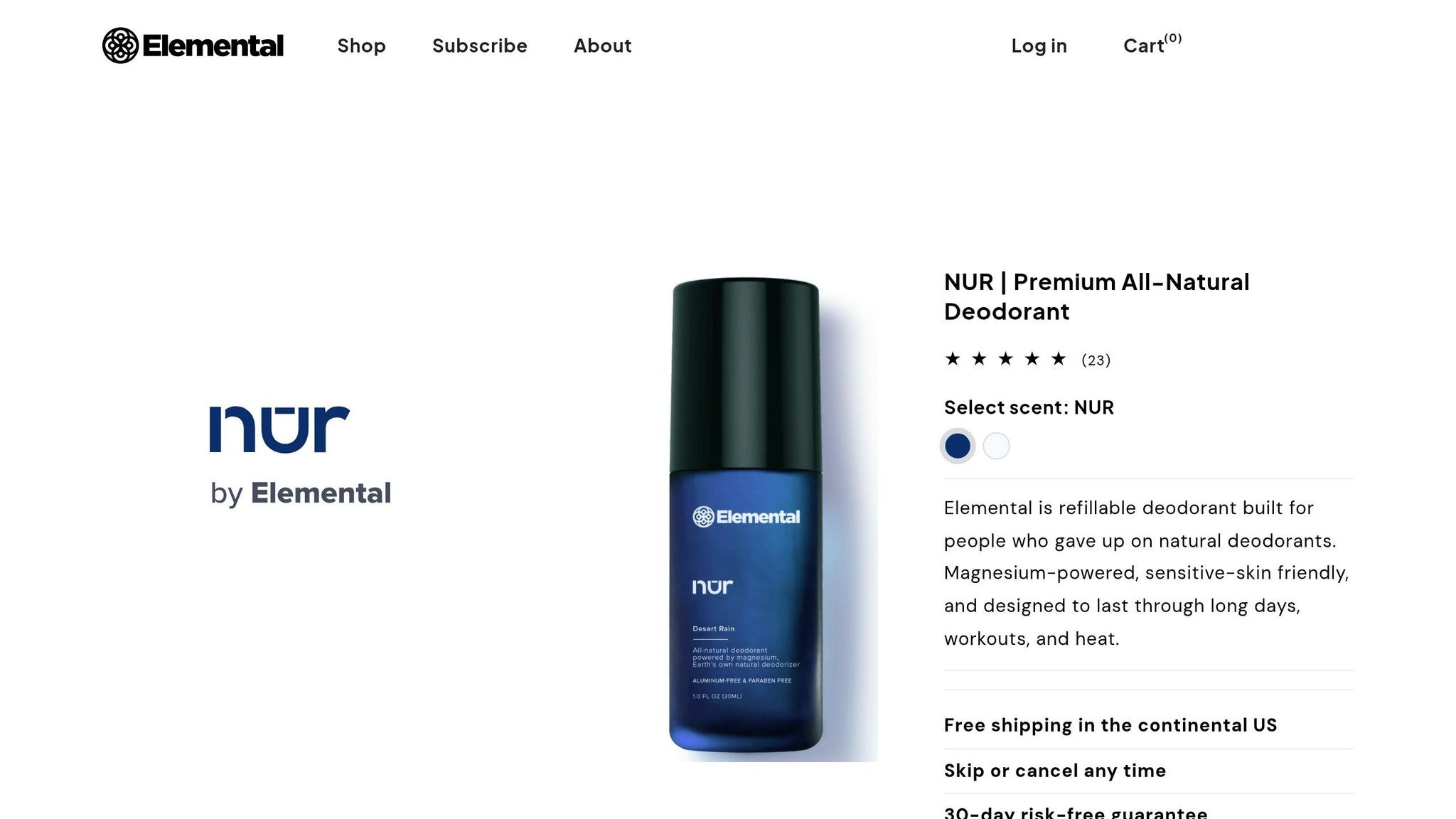
Elemental Deodorant showcases the strengths of refillable systems with its glass bottle design. The bottle maintains its durability over time, and when it’s time for a refill, a biodegradable pouch is delivered. Simply pour the contents into your existing bottle - no extra hardware or new case required.
The deodorant formula uses magnesium to naturally neutralize odor, avoiding aluminum and baking soda, making it suitable for many with sensitive skin. Verified customers often praise the lack of clothing stains and the resilience of the glass container [3].
Elemental offers two options: the NUR scented version and the Air fragrance-free version. Both are available with a subscription option, which reduces the cost of refills even further. Ready to move away from single-use plastic? Shop NUR or Shop Air to get started, or try a refill if you already own the bottle.
sbb-itb-18dae44
Single-Use Deodorant Packaging
What Single-Use Packaging Looks Like
Take a stroll down the deodorant aisle, and you'll see the same familiar design: a plastic tube with a twist dial, a snap-on cap, and a protective seal. These seemingly simple sticks are actually made from a mix of plastics like HDPE, LDPE, and PP, often paired with small metal components. This combination makes them convenient for daily use but complicated when it comes to disposal and recycling [11]. The complexity of these materials contributes significantly to their environmental impact.
The Waste Problem
A single deodorant stick typically lasts one to two months, leading to about 4–6 discarded tubes per person each year. Multiply that by the population, and the numbers are staggering: in the U.S. alone, 550 million plastic deodorant dispensers are thrown away annually, adding up to more than 15 million pounds of plastic waste each year [4][13].
Recycling these containers is far from straightforward. The mix of materials and leftover product makes them difficult to process. Most municipal recycling programs can't handle them efficiently. Ernie Simpson, Lead Scientist at TerraCycle, explains the challenge:
"They're shredded. So, the whole step is to take the material, shred it, wash it, melt it and then form new pellets from the original material." [11]
However, consumers rarely clean or disassemble these containers, meaning they often end up in landfills. With only 9% of all plastic ever produced being recycled [4], single-use deodorant sticks are among the least recyclable and most wasteful items.
Price and Availability
From a cost perspective, single-use deodorants are widely accessible, typically priced at about $6.50 for a 40g stick [13]. They dominate store shelves because they're inexpensive upfront and easy to find. There's no learning curve or waiting for refills - just grab and go. However, this convenience comes at a price over time, as you’ll keep buying replacements indefinitely without any long-term savings.
Ease of Use and Familiarity
Single-use deodorants are undeniably convenient. They’re ready to use straight out of the package, with no assembly or extra steps required. This simplicity has made them the industry standard for decades, and their familiarity keeps customers coming back [1]. Maya Thornton, Senior Beauty Editor at beautishops.com, highlights this connection:
"Convenience is part of sustainability because abandoned products become waste too." [1]
However, the ease of tossing out a plastic tube every few weeks is a major contributor to the waste problem. While single-use packaging feels convenient, the environmental cost is hard to ignore.
Wild NEW Roll-On Deodorant Review: Is it Better than the Stick?
Environmental Impact: Side by Side
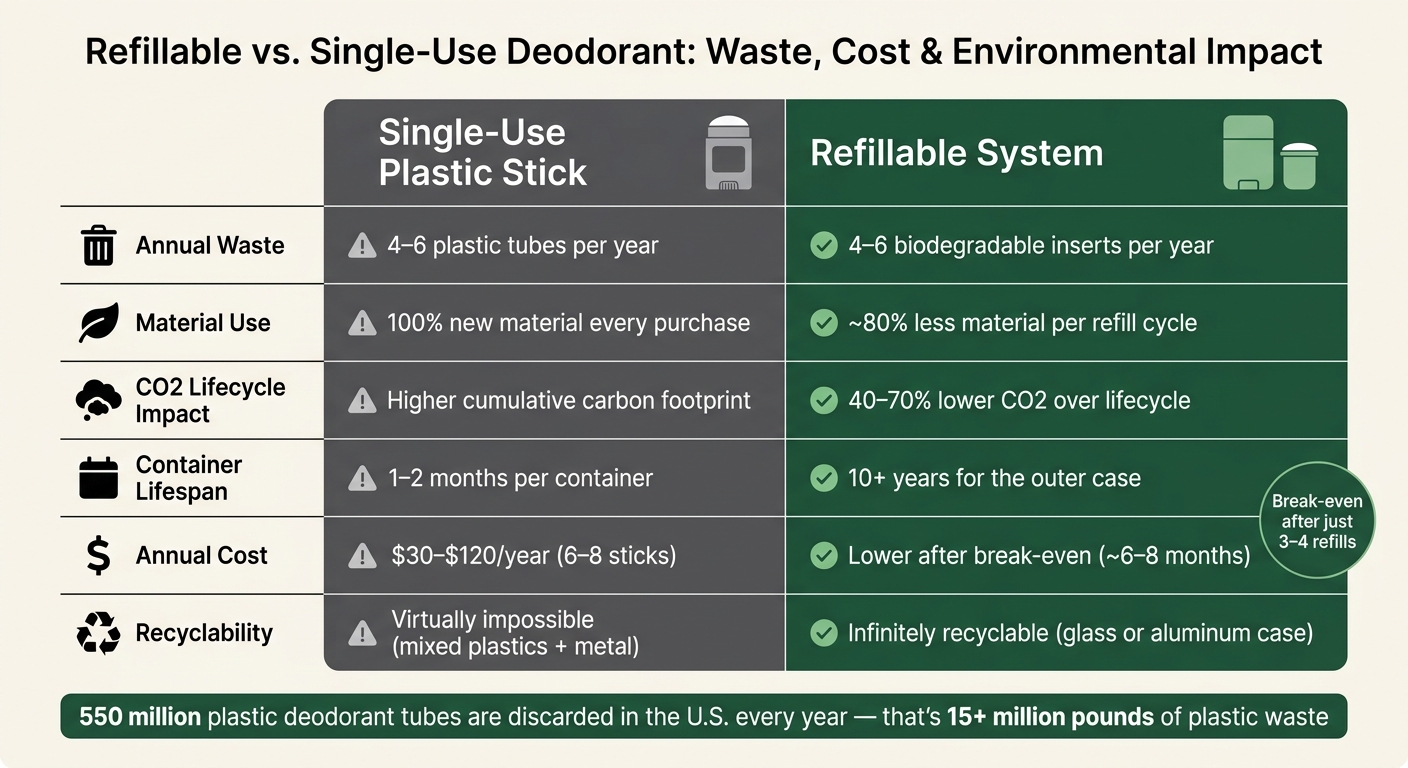
Refillable vs. Single-Use Deodorant: Waste, Cost & Environmental Impact
How Much Waste Each System Generates
The numbers tell a clear story about waste. Over a lifetime, the average person discards around 102 plastic deodorant containers, each taking over 450 years to break down in a landfill [4]. That’s a lot of waste for a product you use daily.
Refillable systems change the game. Instead of tossing the entire container, you replace only the product inside - usually packaged in biodegradable materials like paper or cardboard. This approach cuts material use by about 80% per refill cycle compared to single-use containers [4]. A single durable case, made from aluminum, stainless steel, or glass, can replace more than 50 disposable plastic containers over its lifetime [4].
Carbon emissions also shift dramatically. While producing a durable case takes more energy upfront than a plastic tube, the payoff comes quickly. After just 5–6 refills, the environmental impact of the refillable system becomes lower than single-use options [4]. Over two years, a reusable aluminum case produces 79% fewer CO2 emissions than single-use plastic [7]. In total, switching to refillable packaging can lower your deodorant’s carbon footprint by 40–70% over its lifecycle [9].
| Criterion | Single-Use Plastic Stick | Refillable System |
|---|---|---|
| Annual waste | 4–6 plastic tubes | 4–6 biodegradable inserts |
| Material reduction | Baseline | ~80% less per refill cycle [4] |
| CO2 impact | Higher cumulative footprint | 40–70% lower over lifecycle [9] |
| Container lifespan | 1–2 months | 10+ years [4] |
| Break-even point | N/A | After 5–6 refills [4] |
These figures highlight the practical benefits of refillable systems, especially when you consider the challenges of recycling conventional plastic containers.
Recycling Realities in the U.S.
Recycling isn’t as straightforward as it seems. Many people assume that any container with a recycling symbol can be recycled, but that’s rarely the case with deodorant sticks.
Most deodorant packaging falls into the category of "complex plastic" - a mix of different resins (HDPE, LDPE, and PP) combined with metal components like springs in the twist mechanism. As PitFresh explains: "Conventional deodorant packaging isn't just plastic - it's complex plastic... This complexity makes them virtually impossible to recycle through standard municipal systems." [4]. Adding to the problem, leftover product inside the tube often leads to rejection by U.S. recycling facilities, sending these containers straight to landfills - even when consumers try to recycle them. It’s no surprise that only 9% of all plastic ever produced has been recycled [4], and deodorant packaging is a prime reason why that number remains so low.
Refillable systems avoid these issues. Cases made from materials like glass or aluminum are infinitely recyclable. Aluminum, in particular, can be recycled repeatedly without losing quality [7]. Refill inserts, often compostable or made from recyclable cardboard, offer a much simpler and more effective end-of-life solution compared to multi-material plastic tubes. Elemental Deodorant’s refillable glass bottle, paired with biodegradable refill pouches, directly addresses these recycling challenges, aiming to eliminate plastic waste entirely [14]. This makes refillable systems a smarter choice for reducing waste and supporting better recycling practices.
Cost and Convenience: A Direct Comparison
Total Cost Over a Year
At first glance, single-use deodorant sticks seem budget-friendly, with prices ranging between $5 and $15 each. However, since most people replace their deodorant every 4 to 8 weeks, this adds up to 6 to 8 sticks per year, costing $30 to $120 annually, depending on the brand.
Refillable systems, on the other hand, start with a higher upfront cost - starter kits typically range from $15 to $40. This is because you're investing in a durable, reusable case designed to last for years. The good news? Refills cost 20% to 40% less than buying a brand-new stick every time [15]. Most users break even after just 3 to 4 refill cycles - roughly 6 to 8 months of use [7].
Subscriptions add even more savings. For example, Elemental Deodorant offers a subscribe-and-save option that lowers the cost of refills significantly compared to one-time purchases. Plus, it eliminates the hassle of remembering to reorder. Packaging consultant Sunny Wan explains:
"Refillable is one of the few packaging formats where repeat purchases cost less for both the brand and the customer." [2]
| Cost Factor | Single-Use Sticks | Refillable System |
|---|---|---|
| Upfront cost | $5–$15 per unit | $15–$40 starter kit |
| Recurring cost | Full price every time | 20–40% less per refill [15] |
| Annual spend (est.) | $30–$120 | Lower after break-even |
| Break-even point | N/A | After 3–4 refills [7] |
Refillable systems are not just about cost - they also offer practical benefits, like ease of use and portability, that can make them a better long-term choice.
Refill Frequency, Portability, and Ease of Use
Some assume that refillable systems are more complicated, but the reality is quite simple. Refills last 4 to 8 weeks, the same as a typical stick deodorant [6]. The difference lies in the process: instead of throwing away a plastic tube, you replace it with a refill. Modern refill systems take less than 30 seconds to swap out [7].
For Elemental Deodorant's refillable glass bottle, users describe the process as straightforward: "open the lid, pour in the refill, and reseal the container" [3]. There’s no tricky assembly or extra tools required.
Portability is another area where refillable systems shine. Glass or aluminum cases are sturdier than plastic tubes, which can crack or warp in a gym bag or suitcase. Solid and semi-solid refills also avoid TSA liquid restrictions, making them a great pick for frequent travelers [4].
The only adjustment is the 2 to 4-week transition period if you're switching from antiperspirants [6]. As Maya Thornton, Senior Beauty Editor at Beautishops, puts it:
"Convenience is part of sustainability because abandoned products become waste too." [1]
When a product is easy to use, you're more likely to stick with it. This is where refillable systems excel, combining practical performance with long-term savings and environmental benefits.
Ready to see how a refillable system fits into your routine? Try a refill or subscribe and save to enjoy a lower cost per use right from the start.
Which Option Fits Your Lifestyle?
If Reducing Waste Is a Priority
Refillable deodorant systems are an easy way to cut down on waste. By switching to refillable packaging, you can reduce waste by up to 90% [5][12]. Durable cases made from materials like glass or aluminum are designed to last anywhere from 3 to 10+ years [5][7]. In contrast, traditional deodorant sticks typically use 15 to 25 grams of plastic per case, meaning one person can avoid using 4 to 6 plastic containers each year [7][12]. On top of the environmental perks, refillable systems can also save you money over time.
If Budget Is the Main Factor
Refillable systems might cost more upfront, with starter kits ranging from $15 to $40, but they pay off in the long run. Refills are typically 20% to 40% cheaper than buying a completely new deodorant stick each time [7][12]. Most people break even after 3 to 4 refill cycles, which is about 6 to 8 months of use [7]. After the first year, users can save 15% to 25% annually compared to buying single-use deodorants [5][7].
Elemental Deodorant’s subscription option helps make budgeting even easier. It locks in a lower cost per refill and takes care of reordering automatically, so you’re always stocked without overspending on single-use products.
If Convenience Comes First
Single-use deodorant sticks may seem more convenient at first, but refillable systems aren’t far behind. Swapping out a refill takes less than 30 seconds [7], and subscribing means you don’t have to worry about remembering to reorder. For travel, glass or aluminum cases are more durable than plastic tubes, and solid or semi-solid refills are TSA-friendly since they don’t count as liquids [5][7].
If you’re switching from an aluminum-based antiperspirant, expect a brief adjustment period of about 1 to 2 weeks [5][12]. After that, most people find the process just as simple as before, with the added benefits of less waste and lower ongoing costs.
Why Choose Elemental Deodorant?
Elemental Deodorant checks all the boxes for eco-conscious, budget-focused, and convenience-driven lifestyles. Its magnesium-based, aluminum-free formula effectively neutralizes odor without using baking soda, making it a gentle choice for people with sensitive skin. Verified users have even noted its performance holds up in challenging conditions, such as 95°F heat [10].
The refillable glass bottle is designed to last, so you only need to replace the deodorant itself. When you’re running low, refill pouches arrive at your door - no extra plastic waste, no need for a new case. Subscribing not only lowers your cost per refill but also eliminates the hassle of reordering. Whether your top priority is reducing waste, saving money, or simplifying your routine, refillable deodorant delivers on all fronts. Try a refill or subscribe and save today to make the switch easier and more affordable.
FAQs
How do I know which refill format will fit my deodorant case?
Refill systems differ depending on the product, as there’s no one-size-fits-all solution. Typical options include replaceable cartridges, refill pouches, or partially refillable inserts.
For Elemental Deodorant, the setup is simple: pair the refillable glass bottle with biodegradable refill pouches. Just unscrew the lid, pour in the contents of the pouch, secure the lid, and give it a shake before using. Always check the specific instructions for your product to make sure everything works as intended.
What should I do if my refillable deodorant case breaks or gets lost?
Refillable deodorant cases are designed to last, but accidents happen. If your case breaks or gets lost, you'll need a replacement to keep using the refill system. For help with your Elemental Deodorant case, visit their official support page or manage your account for guidance. Taking care of your case can extend its lifespan significantly.
Are refill pouches and inserts actually compostable in the U.S.?
In the U.S., the compostability of refill pouches or inserts largely depends on the facilities available in your area. Some of these items are certified for industrial composting, but most households don't have access to facilities that accept packaging materials. Many composting centers focus solely on food and yard waste, often rejecting packaging - even if it's labeled compostable. Additionally, even certified compostable items may not fully decompose under certain conditions. Be sure to review your local composting guidelines to determine whether these materials can be processed.
Related Blog Posts
See how the system works: refillable natural deodorant — a glass bottle you keep, biodegradable pouches that refill it.