


Key Takeaways
- Refillable deodorants can cut packaging waste by up to 70% compared to single-use plastic tubes and aerosol cans.
- Only 9% of all plastic ever produced has been recycled, while up to 70% of cosmetics plastic ends up in landfill.
- The benefit depends entirely on repeated refilling. A case used once wastes more than a plastic tube.
- Dove's refillable deodorant uses 54% less plastic than its standard products, so the mechanics already work.
- Refillable "parent" packaging has cut material use by 80–98% in categories like Japanese detergent pouches.
- Around 91% of consumers think refillable packaging is better for the environment, yet more people break the refill habit than keep it.
- Glass or aluminum cases paired with biodegradable pouches keep material in circulation and make the switch stick.
The short version
The most direct way to chip at the plastic problem is to change what you do every morning. Traditional personal care runs on a straight line: extract, use briefly, throw away. A refill model skips the middle of municipal waste handling that mostly doesn't work.
The switch works best when the container is built to last and the refill takes almost no effort. Durable cases plus lightweight inserts keep material in circulation instead of the bin. Big personal care brands have already proven the mechanics hold up. What's left is the human part: building the habit that makes any of it stick.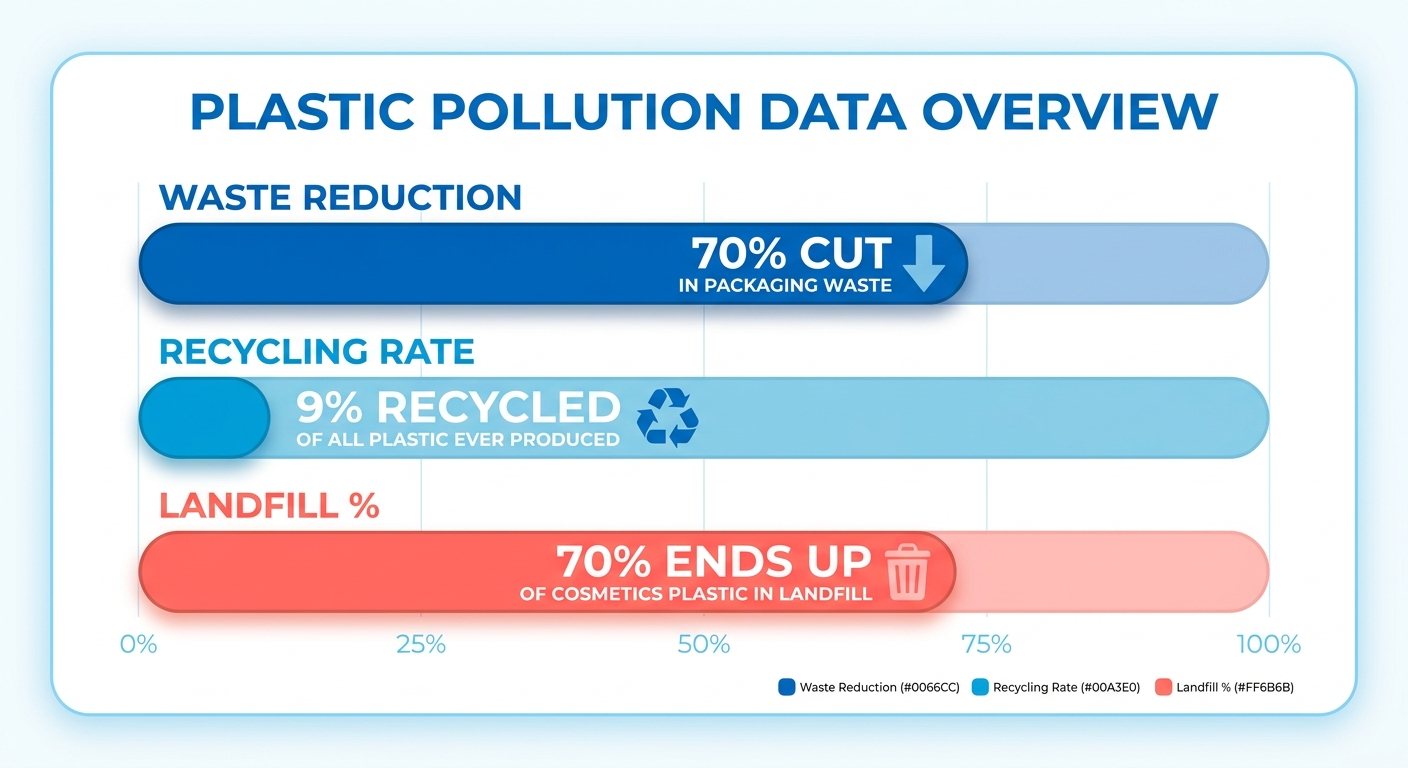
What actually makes refillable deodorant reduce waste?
It reduces waste only when you refill the same case again and again. The payoff comes from habit, not the purchase. A reusable container has to be used a minimum number of times to offset the footprint of making it. Buy the case, use it once, abandon it, and you've done worse than a plastic tube.
The tension is worth naming. Around 91% of consumers believe refillable packaging is better for the environment, yet research on refill-at-home behavior found more people drift away from the habit than stick to it. They forget to reorder. They buy a second case in a new scent. They keep a backup single-use stick "just in case."
The deodorant that wins isn't the one with the best eco-credentials on the label. It's the one that makes refilling so simple you never revert. A subscription that ships the refill before you run out closes most of that gap.
Which features signal a genuinely low-waste product?
Look for three things: a durable refillable bottle, biodegradable refills, and natural ingredients that don't tack on hidden packaging. One well-used glass case beats a drawer full of refillable products. Owning multiple cases for different scents quietly erases the savings you switched to get.
Adoption goes up when the process is easy. Free return shipping did the heavy lifting in the programs that worked. Convenience, not guilt, drives the behavior that cuts waste. If you're building a low-waste routine, our zero waste tips guide pairs well with a refill habit.
Is switching worth it for you?
For most health-conscious buyers, yes. Refillable systems run roughly 30% cheaper over time than repurchasing full traditional units, and 75% of consumers now factor eco-friendly packaging into their purchases. A magnesium-powered formula adds sensitive-skin friendliness on top of the waste reduction.
One honest carve-out: skip refillables if you know you won't stick with the reorder cycle. If a backup stick will always end up in your bag, the container's upfront footprint may never pay off. The system only works if you commit to using it.
Where to start
Refillable deodorant is the clearest way to cut personal-care plastic, and the reason is simple: refilling skips a recycling system that mostly doesn't work. An estimated 8 million tonnes of plastic leak into the ocean every year, and packaging is a major contributor. Refilling keeps material in use instead of betting on a bin that fails.
Some people searching this topic land on pages with no real content or thin how-to advice, then give up before they act. So here's the practical version. Commit to one durable case. Refill it many times. Choose an at-home refill format over mail-return when you can. That's the whole strategy.
Why does refilling beat recycling for deodorant?
Because it keeps material value instead of destroying it. The Ellen MacArthur Foundation estimates at least 20% of plastic packaging could shift to reusable systems. That drops demand for raw material sharply. Recycling can't match those numbers when the vast majority of plastic never even reaches a processing facility.
Packaging is the core problem, not a side issue. Europe uses roughly 40% of its plastics on packaging, which accounts for 36% of municipal solid waste. A refillable case attacks that load directly. You buy the container once, then buy refills, and the heavy plastic tube never enters the waste stream again.
So this reframes refillable deodorant. It isn't a nicer recyclable. It's an exit from a system that structurally fails.
Is a refillable case always the greener choice?
No. The payoff is a break-even calculation, not an automatic win. A durable case carries a heavier initial footprint, so you have to refill it enough times to come out ahead. The math only works once reuse rates stay consistently high. Buy the case, then abandon it, and the case becomes waste too.
Mail-return systems add another wrinkle. Poorly managed loops can pile on transport, cleaning, and logistics costs that eat into the material savings. Research suggests a reusable container often needs 20 or more use cycles before it beats a single-use equivalent, so the return loop has to stay reliable for the numbers to work.
Here's the judgment call on that contradiction. Material savings are real, but net benefit depends on logistics. At-home refills sidestep the transport and cleaning risks entirely because nothing ships back. That makes home-refill deodorant a stronger case than any return-by-mail option for most people.
What's your first step?
Start small and stay consistent. The environmental case rewards repetition, not a single purchase.
- Pick one case and keep it. A refillable deodorant only saves material once you refill it many times.
- Favor at-home refills. No return shipping means no reverse-logistics penalty.
- Set a refill reminder. Compliance is what makes the break-even math work.
- Extend the habit. Our Reduce, Reuse, Recycle everyday guide shows where else refilling fits.
As Alan Jope, CEO of Unilever, put it:
"Plastic has its place, but that place is not in the environment." - Alan Jope, CEO of Unilever
Switching your deodorant won't fix plastic waste alone. But a case you refill for years, instead of tubes you toss monthly, is a real dent you control. Start there.
Why refillable deodorants matter
Traditional deodorants create a waste problem recycling can't fix. The average American throws out 4.4 pounds of trash every day, and personal care packaging is a steady contributor to that pile. Most single-use plastic tubes and aerosol cans never get a second life. Refillable deodorants matter because they cut that waste at the source instead of hoping a broken recycling stream catches it later.
Packaging is the real culprit. Cranking out single-use containers drives municipal waste volumes up worldwide. Refillable systems break the cycle by killing the need to manufacture a new outer shell for every purchase. Each refill replaces a full container that would otherwise be made, shipped, and discarded. That avoided production is where the deepest savings sit.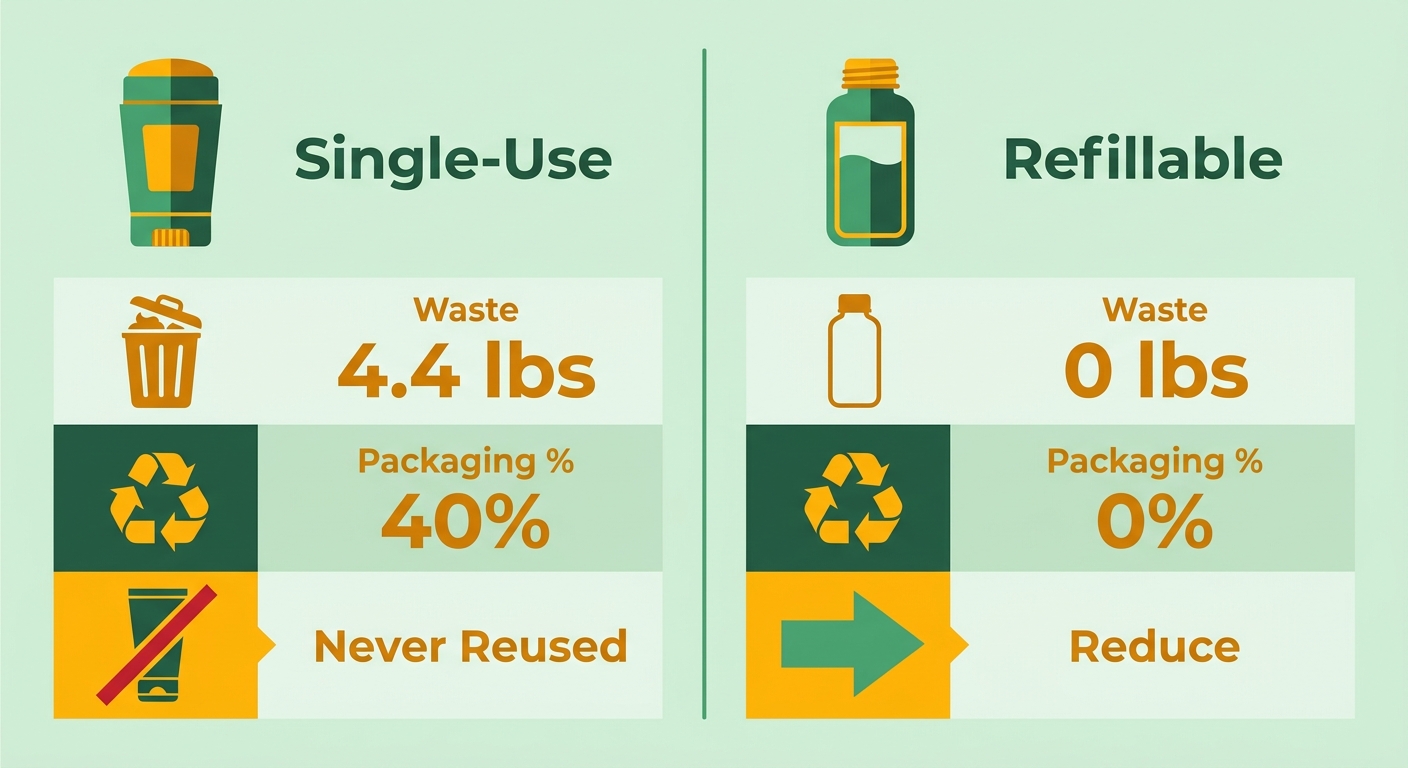
Why does refilling beat traditional packaging?
Refilling keeps material in circulation instead of destroying it. You buy one durable glass bottle, then top it up with a biodegradable refill pouch. That single design choice removes the bottle from the waste stream every time you refill, which is where most of the savings live.
The demand is clearly there. Health-conscious shoppers already believe in this. Market analysts project the global refillable packaging sector to more than double by the end of the decade, growing faster than conventional packaging. Belief isn't the bottleneck. Habit is.
What actually makes a refillable deodorant work?
The best refillable deodorant is the one you'll actually keep refilling. There's a gap between what people believe and what they do. Surveys of refill programs find a majority of first-time buyers never complete a second refill, and behavior studies back that up: people skip refills more often than they follow through.
The refill has to be easy or the habit dies. A durable container that opens, cleans, and reloads without a fight stays practical over time. Designing for the long haul, not the novelty of the first purchase, is what keeps these containers out of the trash.
Proof exists in the wild. In-store refill stations sitting next to the original product see far higher repeat use than mail-back systems that ask customers to package and ship anything back. Effort, not idealism, drives that number.
Does buying premium refillables help or hurt?
Premium framing helps adoption but can backfire if it pushes you into collecting. Owning multiple aesthetic cases defeats the point of switching to a reusable system.
To make a real dent, pick one durable container and stick with it. If you find yourself buying every new colorway or limited edition, the environmental benefit is gone. The math only works when a single vessel gets used repeatedly across its whole lifespan.
Try a natural deodorant that actually works
Experience 24-hour odor protection with Elemental Deodorant. Made with organic ingredients, it's aluminum-free, vegan, and eco-friendly. Gentle on your skin and the planet.
Shop ElementalFor most of you, the choice is simple. Refillable deodorant cuts packaging waste, sidesteps a recycling system that fails on its own terms, and fits how sustainability-minded shoppers already want to buy. If you want to push it further, finding other high-frequency household items to swap is a logical next step.
The glass bottle is built to last. The biodegradable refill does the rest.
Choosing the right refillable deodorant
The best one is the one you'll actually refill again and again. Sounds obvious, but it's the whole game. The deciding factors are a durable bottle, a genuinely low-effort refill, and a formula you don't want to quit. Get those three right and the environmental payoff follows.
One tension worth knowing before you buy: moving from a disposable habit to a reusable one means overcoming friction. A system that demands complex assembly or hard-to-find replacements gets abandoned fast. Look for designs with intuitive reloading, so keeping the habit takes almost no thought.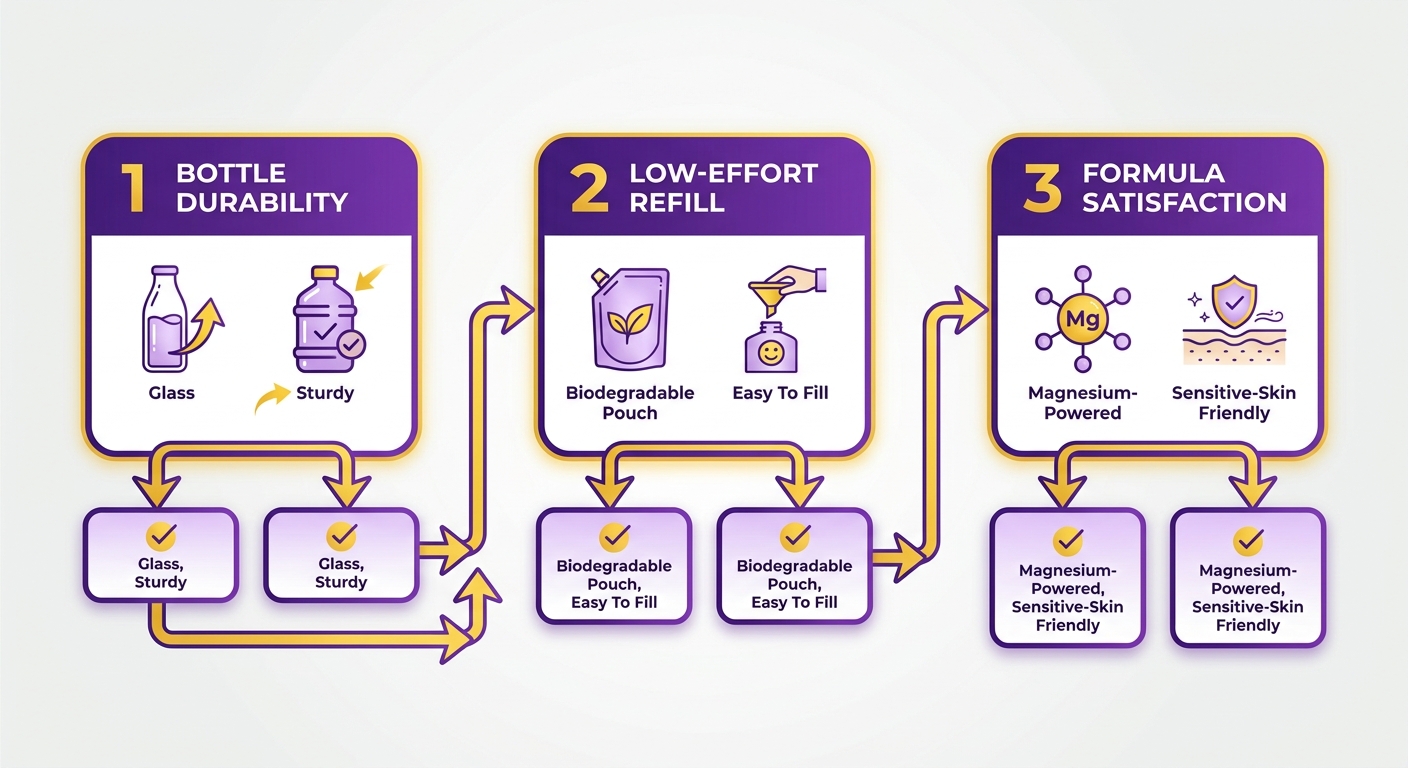
What features should you look for?
Prioritize a durable bottle, a biodegradable refill, and a formula that suits your skin. A refillable glass bottle survives years of use. The refill should go in without fuss. Look for biodegradable pouches rather than more plastic.
Certifications tell you where a brand's values sit. Cruelty-free and vegan-friendly marks confirm no animal testing and no animal-derived ingredients. If those matter to you, check for them directly rather than trusting vague "natural" language on the front.
Scent and skin compatibility decide whether you stick with it. Some refillable lines offer multiple scents plus sensitive-skin formulas, using alternative mineral bases for people who react to standard sticks. If you have reactive skin, start with a fragrance-free or specialized sensitive-skin blend.
Does refilling actually reduce waste?
Only if you refill repeatedly and resist collecting extra bottles. Refillable systems can use dramatically less material than single-use tubes. One refillable glass bottle paired with biodegradable pouches replaces a stream of throwaway containers.
Researchers who interviewed 26 consumers about refill-at-home habits showed how easily convenience derails good intentions. Participants often reverted to single-use options during travel or busy stretches. The fix: keep your reusable container in plain sight and always have a replacement insert on hand before the current one runs out.
The other proof point is return-based models. Some personal-care companies see high return rates on their reusable bottles even without offering a refund. Effortlessness drives compliance more than money does. If a refill format asks too much of you, you'll drift back to the tube.
How do you find one you'll trust?
Read real reviews, ask people with similar skin, and lean on a trial guarantee. Reviews from verified buyers surface the practical stuff product pages hide: does the refill go in easily, does the scent fade, does it irritate. Ask friends who've already switched.
A trial guarantee removes the biggest first-purchase risk. Our 30-day risk-free guarantee exists for exactly this reason. Start with one bottle, test the mineral-based formula on your own skin, and know you're not stuck if it doesn't work out. You get to judge it under real conditions before committing to the system.
What refillable deodorant actually gets you
Refillable deodorant delivers three concrete wins: lower cost per use, far less packaging waste, and a formula you control. The savings come from paying only for the product inside, not a new case every time. That shift makes sustainable living feel practical instead of preachy, which is exactly what closes the gap between good intentions and actual habit.
The reframe worth holding onto: refillables aren't a nicer recyclable. They're a different way to buy entirely, where the container leaves the disposal cycle and stays in your bathroom for years. That permanence is the real value of a refill-parent bottle you keep and reuse.
How much do refillables actually save you?
They can cut your yearly deodorant spend by up to 50%, because you stop buying the container. A durable case is a one-time purchase. After that, you pay for refills alone, which strips out the packaging cost baked into every single-use tube.
The math only works if you keep refilling. That's the catch. A case used twice saves you almost nothing; a case used twenty times pays for itself many times over. Subscription models help by making refills automatic, so you never revert to grabbing a plastic tube out of convenience.
Don't treat these containers as collectible accessories. Buying multiple cases for aesthetic variety undermines the financial benefit right along with the environmental one.
What makes biodegradable refills better for waste?
One durable case can replace dozens of throwaway tubes over its lifetime, and the average person goes through roughly six to eight deodorant containers a year. Multiply that across a decade and one reusable body quietly displaces a small mountain of tossed plastic shells.
The design details matter more than the marketing. Plant-based refill packs, glass bottles, and cases built to survive a bathroom drop are what keep material in use. A well-made case shrugs off the everyday knocks that send lesser containers to the trash early.
Formulas built on natural active ingredients add a second benefit. You get effective odor protection without the packaging bloat, and for sensitive skin, simpler ingredient lists tend to irritate less than heavy synthetic blends. Our blend is built with these priorities: gentle on skin, entirely plant- and mineral-derived, and designed to hold up through long days and workouts.
Why does the refill habit decide everything?
The environmental payoff hangs on behavior, not the purchase. A refillable system only pays off once you keep refilling it, and plenty of people buy in with good intentions before drifting back to old habits.
This is the core challenge of sustainable product design. Sentiment is overwhelmingly positive; actual compliance means beating daily friction. That's why we offer a flexible subscription that ships replacement inserts to your door on your schedule, so you're never caught empty-handed.
Choose an at-home refill format when you can. Fewer steps, no shipping, no waiting. The easier the refill, the more likely you are to do it again, and that repetition is where every benefit actually lives.
Fitting refillable deodorant into a low-waste routine
A refillable deodorant only cuts waste if it sits inside a routine that supports it. Buy the case, refill it, and pair it with a handful of other low-waste swaps. That's how the math works in daily life, not just on the label.
Slotting a new product into your life takes more than a purchase; it takes a small shift in how your household runs. The routines that stick are the ones that cut decision fatigue and make the sustainable choice the path of least resistance. Set up your environment to support the habit and you head off the usual traps of forgetfulness and convenience-driven backsliding.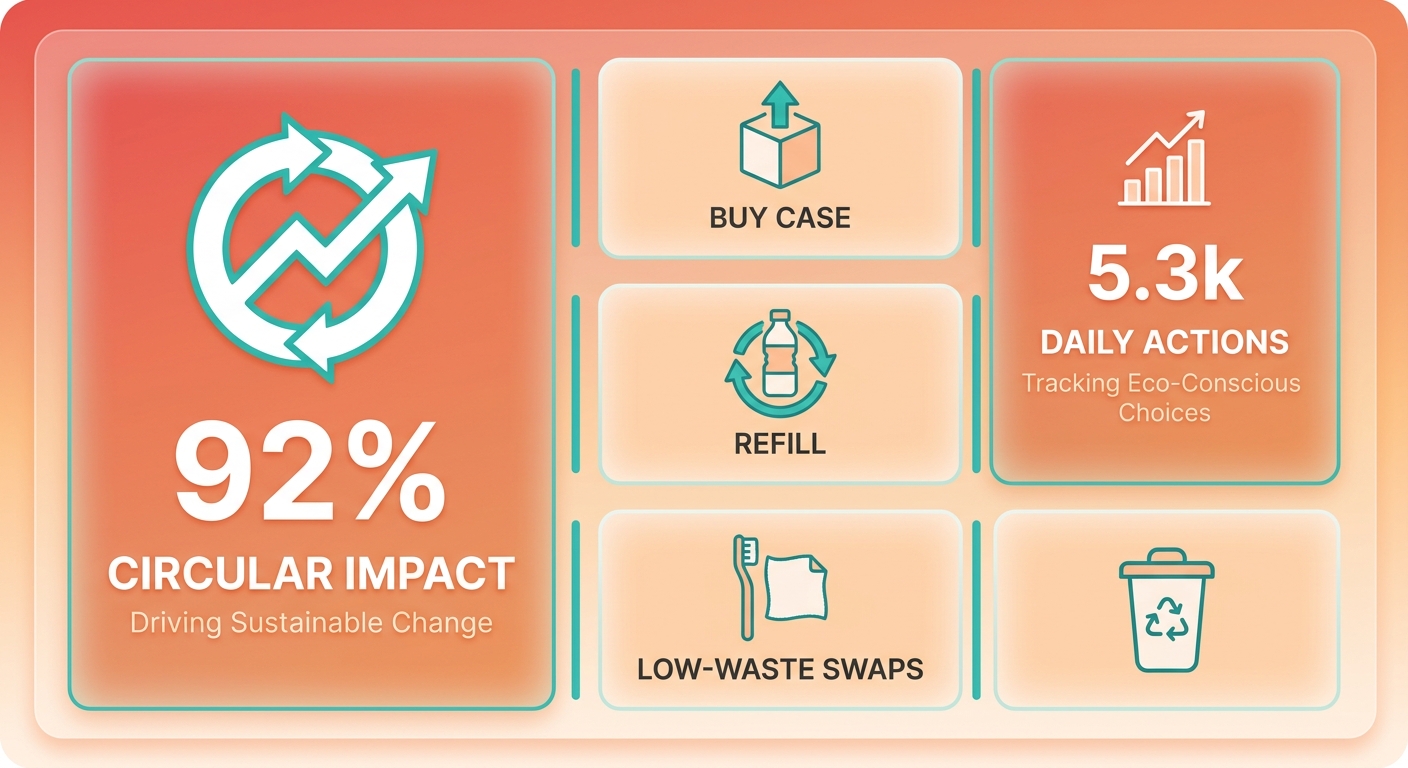
How do you build a routine that actually sticks?
Get the most out of the gear you already own. The environmental benefit of any reusable item scales with how often you use it. Resist the urge to acquire multiple variations and your initial investment earns its full ecological return.
This holds across every personal care category. A highly efficient refill insert only helps if it actually replaces a disposable alternative. Pick one functional design that fits your life and make it your standard.
Then stack the rest of your bathroom the same way. A few swaps that hold up in practice:
- Refuse single-use plastics where a durable version exists (razors, floss containers, cotton rounds).
- Set a refill reminder on your phone, since roughly half of reusable-product owners drop the habit within the first month without a prompt.
- Carry reusable bags so the low-waste mindset extends past the bathroom shelf.
Reuse ranks above recycling in the waste hierarchy for a reason. It keeps material in use instead of betting on a broken bin. For more ways to trim your household footprint, the 26 Practical Zero Waste Tips for Everyday Living resource is a solid start.
What about sensitive skin and natural formulas?
If your skin reacts easily, the formula matters as much as the packaging. Look for gentle, fragrance-free options and check for dermatologist-tested claims. A refill you can't tolerate gets abandoned, and an abandoned refill saves nothing.
Our formula is built to be gentle and non-irritating, which keeps the habit going instead of ending it after one flare-up. That's the practical point. Skin comfort is a retention feature, not just a nicety.
When you compare options, real reviews tell you more than eco-badges. Check ratings from people with sensitive skin specifically. They'll flag irritation faster than any lab claim.
When should you skip a refillable?
Be honest about your own logistics. If packaging, labeling, and mailing back empty containers sounds like a chore you'll postpone forever, look for another format. A system you can run entirely at home kills the risk of a backlog of unreturned empties.
The deodorant that wins isn't the one with the best sustainability story. It's the one you'll refill on autopilot for years. Build the routine around effort, not intentions, and the waste reduction follows.
Frequently Asked Questions
1. How do I properly dispose of a refillable deodorant case when it finally wears out?
Glass and aluminum cases are highly recyclable at the end of their lifespan, unlike mixed-plastic tubes. Clean the empty case, separate any plastic components, and place it in your curbside recycling. Aluminum recycles indefinitely without quality loss, and glass can be reprocessed repeatedly, keeping material circulating even after years of use.
2. Does aluminum-free deodorant actually work as well as antiperspirant?
Aluminum-free deodorants neutralize odor rather than blocking sweat, so they function differently than antiperspirants. Mineral-based alternatives target odor-causing bacteria directly while allowing your body's natural thermoregulation to occur. Many users find them highly effective for daily wear, though heavy sweaters may benefit from occasional reapplication. Sensitive skin often tolerates these clean formulations much better than traditional chemical antiperspirants.
3. How often will I need to reorder refills compared to buying regular deodorant?
Your replacement schedule will mirror your typical usage patterns with traditional products. To prevent gaps that might tempt you to purchase a temporary plastic alternative, setting up an automated delivery schedule is highly effective. Having a replacement arrive just before you finish your current stick ensures seamless continuity.
4. Can refillable deodorant handle workouts and hot weather?
Refillable deodorants perform exceptionally well during exercise when formulated with high-quality active ingredients. Specialized mineral blends provide robust protection through intense workouts without relying on heavy synthetic chemicals. For high-friction activities, selecting a soothing, friction-reducing formula helps prevent chafing. Applying the product to clean, dry skin ensures optimal performance.
5. What's the difference between at-home refills and mail-return systems?
At-home systems utilize lightweight, compostable, or easily recyclable inserts that you swap out yourself. Mail-return programs require you to collect empty containers and ship them back to the manufacturer for professional cleaning and reuse. The former minimizes shipping emissions and user effort, while the latter relies on a highly disciplined return loop to achieve its environmental goals.
6. Is refillable deodorant safe for people with reactive or eczema-prone skin?
Reactive skin often tolerates these options better because they typically feature streamlined, plant-derived ingredient lists. Look for fragrance-free, dermatologist-tested formulas that avoid common irritants like baking soda or synthetic dyes. Starting with a patch test on your inner arm is always a wise precaution. Many brands offer satisfaction guarantees so you can evaluate skin compatibility without financial risk.
7. What happens to the savings if I buy multiple cases in different scents?
Acquiring multiple outer shells divides your usage across several items, meaning it will take much longer for any single container to offset its initial production footprint. To maximize both your financial savings and environmental impact, it is best to use a single case continuously. If you enjoy variety, you can easily switch scents by changing the insert rather than purchasing a new exterior housing.