


The Quick Verdict on 24‑Hour Odor Protection with Magnesium Deodorants
For most people, magnesium deodorants can be a reasonable option. Magnesium hydroxide neutralizes odor without the aluminum salts found in conventional antiperspirants, and some dermatologists have noted that well-formulated natural options may be suitable for people looking beyond aluminum. The ingredient's skin-friendly reputation has made it a common choice in sensitive-skin product lines. Elemental uses that same active: magnesium hydroxide, no aluminum, no baking soda, formulated for sensitive skin.
What gets less attention: "natural" doesn't guarantee gentler. Some dermatologists report seeing patients react to natural fragrances, sometimes added to cover irritation from high baking soda concentrations. Our formulations skip that setup. We use magnesium hydroxide without baking soda, and our scents come from essential oils rather than synthetic fragrance. Prefer none at all? Our Air bottle is fragrance-free.
What About the Transition Period Everyone Warns You About?
The "detox period" narrative (that your body needs weeks to purge aluminum and adjust) may be overblown. Sweat is initially odorless. Smell appears when bacteria metabolize it into odorous organic acids. Magnesium hydroxide is intended to neutralize those acids on contact, so gaps in protection during the switch likely stem from insufficient application or formulations with too little magnesium, not your body purging anything.
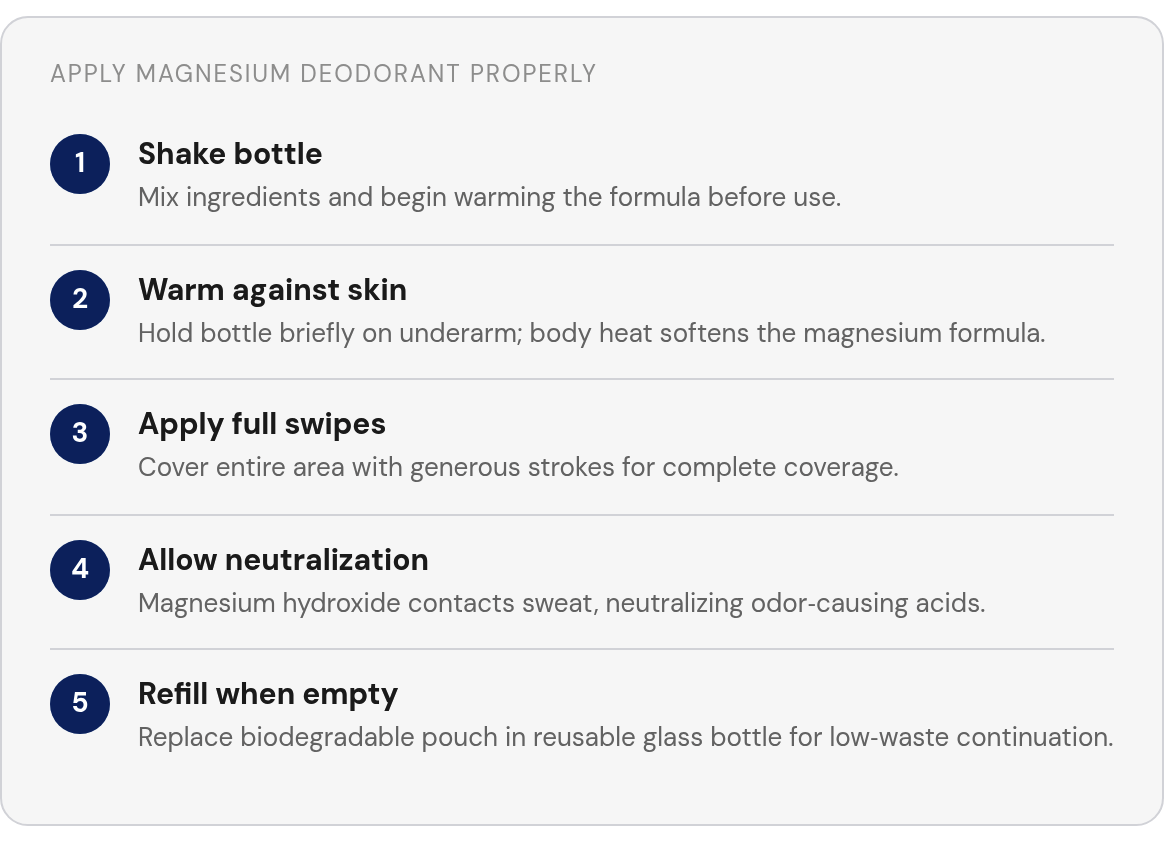
People who struggle usually apply natural deodorant the same way they applied antiperspirant: one quick swipe. Magnesium formulas need a different technique: hold the bottle briefly against skin so body heat softens the formula, then apply full swipes. That's not a detox requirement. It's just proper coverage. Apply it to clean, dry skin, and give it that moment to warm up.
How Refillable Systems Change the Cost and Waste Equation
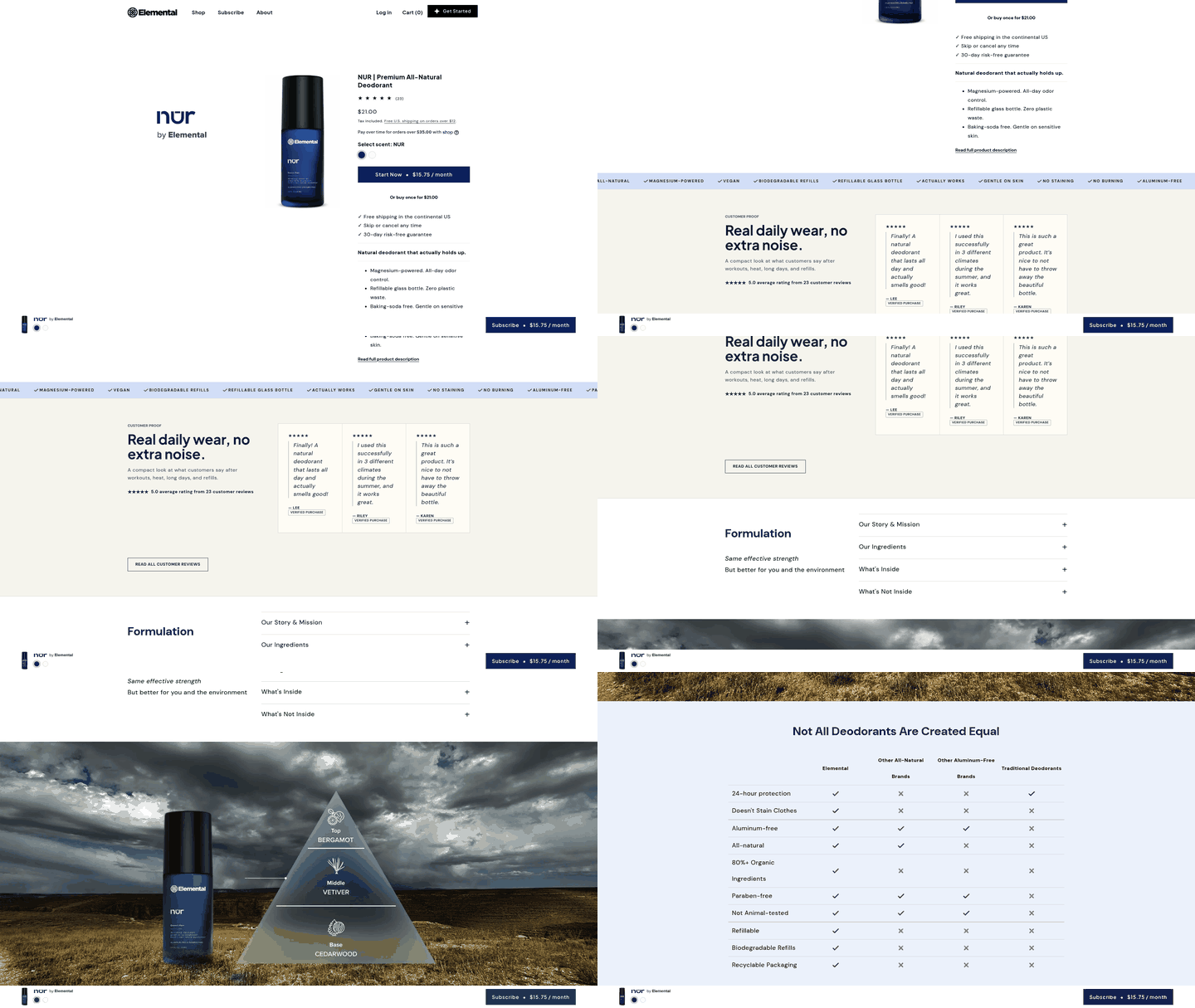
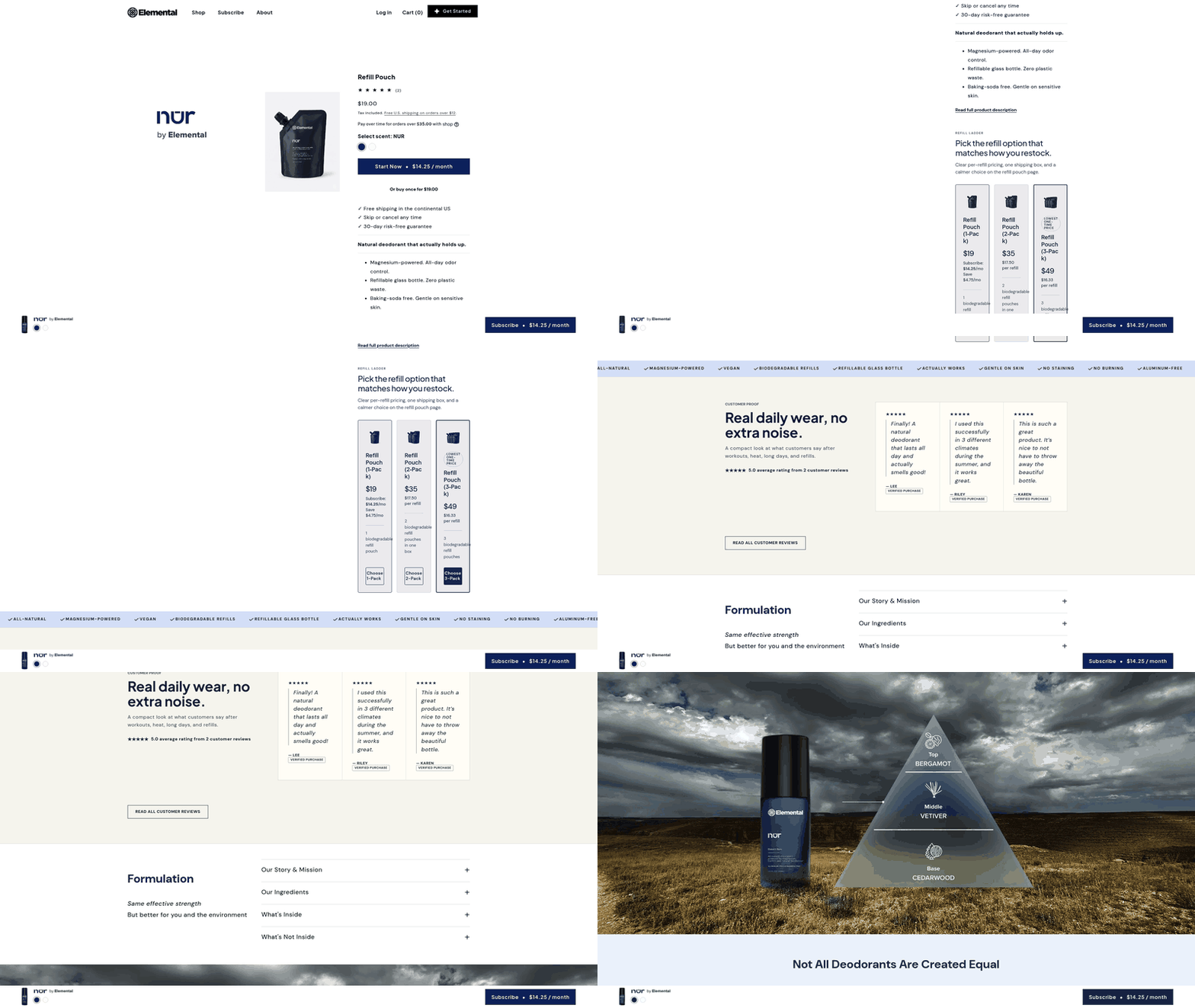
Elemental runs $15.75 a month on subscription, or $21.00 for a one-time purchase. The real difference shows up in waste. Conventional deodorant leans heavily on single-use plastic sticks that get tossed and replaced. Our refillable glass bottle changes that math: you keep the bottle and swap in biodegradable refill pouches instead of throwing the whole thing away. You're not just avoiding aluminum. You're cutting out the throwaway packaging cycle entirely.
The cost-per-use math can improve over time. A reusable bottle may reduce the per-unit packaging cost you'd otherwise pay with every drugstore stick. And because magnesium formulas are designed not to clog pores or leave heavy residue, you may not need separate products to manage buildup or staining.
Before we get into it, the short version:
- Magnesium hydroxide tackles odor at the skin surface rather than shutting down sweat.
- Elemental's refillable setup is built around a permanent glass bottle and low-waste refills.
- Switching usually works better when you focus on coverage instead of waiting out a mythical purge.
- The ingredient's slow interaction with sweat is central to both comfort and longevity.
- Sensitive-skin shoppers should read fragrance and baking soda choices as carefully as the active ingredient.
- Refillable packaging changes the deodorant habit from a disposable purchase into a maintained system.
- Application matters more with a magnesium formula than with a conventional antiperspirant stick.
Why 24‑Hour Odor Protection Matters for Sensitive Skin
The daily math of deodorant failure shows up in quiet ways. When protection fades midway through the day, you're reapplying in bathroom stalls, keeping backup sticks in desk drawers, mapping your day around access to touch-ups. For anyone with sensitive skin, that cycle comes with a second cost: every reapplication means another dose of whatever caused the irritation in the first place.
What Makes All-Day Protection Non-Negotiable
Sensitive skin doesn't just react more. It reacts differently. If you commute, work a full day, then train or attend evening events, you're asking your deodorant to perform across three distinct microclimates: the closed environment of transit, climate-controlled office air, and the high-humidity conditions of exertion.
That's the setup where magnesium hydroxide may earn its place. Baking soda is highly water-soluble and can shift pH quickly, while magnesium hydroxide is generally described as less water-soluble, meaning the skin may adjust more gradually. The intended benefit isn't just "gentler". It may also be longer-lasting. When magnesium hydroxide neutralizes odor compounds without occluding sweat ducts, the freshness can persist as long as the ingredient remains active on the skin.
The 24-hour claim matters because aluminum-based antiperspirants work by plugging sweat glands: effective for odor control, but a different mechanism entirely. Magnesium-powered formulas like Elemental's let you sweat while keeping odor in check, without the aluminum, parabens, or phthalates that some users prefer to avoid. That distinction becomes important when you're working through long days, workouts, and heat without a chance to reapply.
The Natural-Ingredient Paradox
The assumption that plant-derived formulas are inherently safer collapses under dermatological scrutiny. Lavender oil and tea tree oil, common in natural deodorants marketed as "clean", have attracted attention in some published discussions about endocrine effects. The deeper irony: many natural formulas include essential oils specifically to cover for an otherwise harsh base. A product can look botanical on the front label while still being difficult for reactive underarms to tolerate.
Some dermatologists report that fragrances, including those of natural origin, are among the more frequent triggers of underarm sensitization. Preservatives and penetration-enhancing vehicles may also play a role in reactive skin. The trade-off becomes clear when you recognize that "natural" is a marketing category, not a safety standard. Aluminum-free formulations sidestep one set of concerns but sometimes introduce others.
Why Refillable Systems Matter Beyond Skin Health
Single-use plastic deodorant sticks create waste that adds up: many containers per person over time. When you're already cycling through multiple products to find one your skin tolerates, plastic-free options remove some of the waste from that trial period.
Refillable magnesium deodorants address two problems simultaneously. The packaging reduction is direct: one reusable glass bottle can replace many plastic sticks. The formula may also avoid the fragranced masking agents that turn some "natural" products into reactivity roulette. Elemental's refillable system uses biodegradable pouches that slot into a permanent glass bottle: you keep the container and replace only the contents.
Our experience aligns with what some dermatologists report: magnesium formulations without added fragrances can perform consistently for users who abandoned conventional deodorants after developing reactions. The all-day claim is rooted in that intended mechanism: pH modulation and compound neutralization rather than duct occlusion or aggressive alkalinity. For anyone who's mapped their day around bathroom access, that timeline shift isn't minor convenience. It's the baseline that makes everything else workable.
How Magnesium Works: The Science Behind All‑Day Freshness
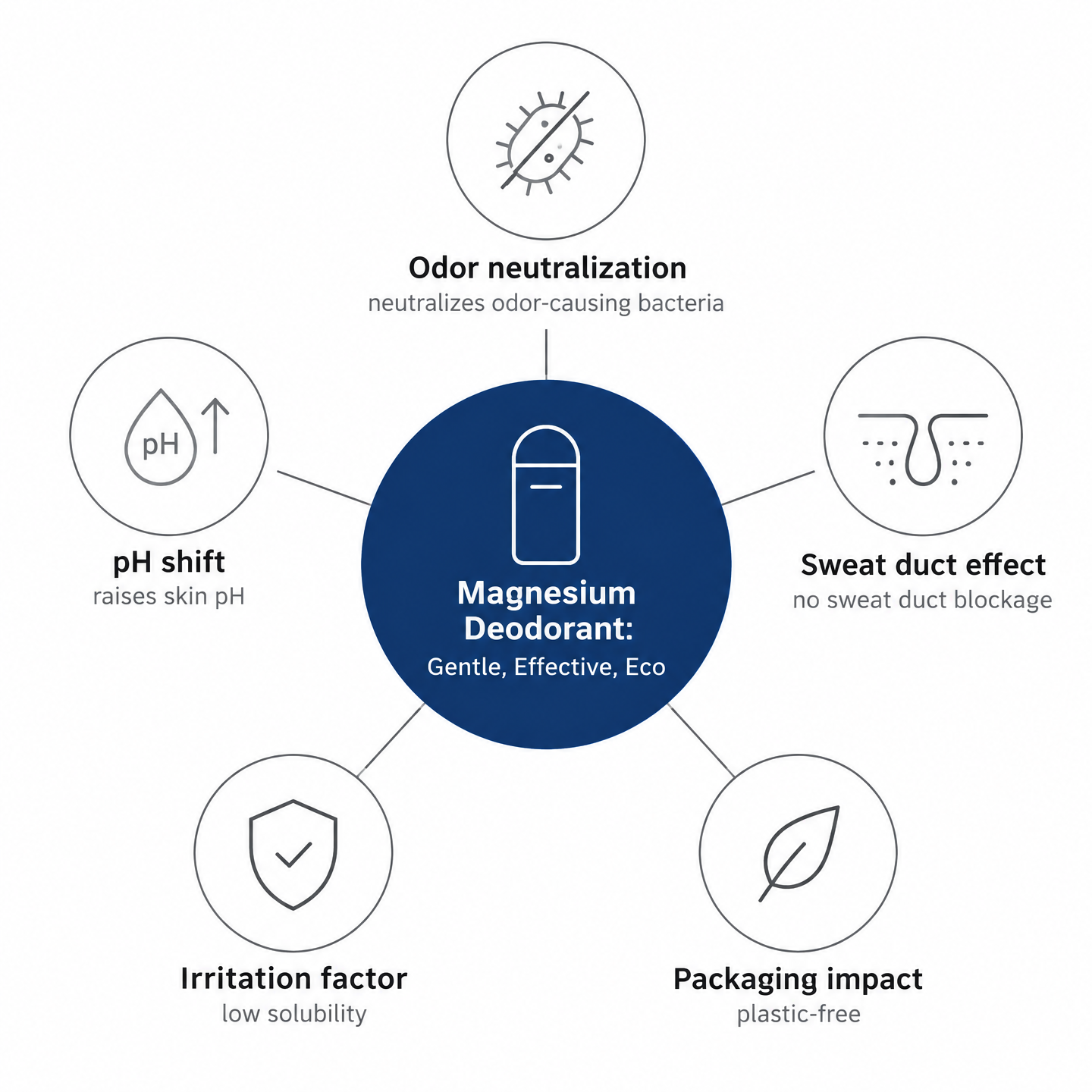
Magnesium hydroxide is intended to neutralize odor-causing acids while being gentler on sensitive skin than many alternatives. The mechanism centers on pH modulation rather than blocking sweat glands. When you apply magnesium hydroxide to your underarms, it may gradually shift the skin's pH from its natural acidic range toward an environment less favorable to odor-producing bacteria.
The process unfolds differently than you might expect. Body odor develops when skin bacteria break down sweat components into odorous organic acids. Magnesium hydroxide neutralizes these weak acids before they create the characteristic smell. Unlike aluminum salts that physically plug sweat ducts, magnesium works on the surface of your skin, leaving your natural cooling system fully functional.
Why Magnesium Hydroxide Avoids the Irritation Trap
The chemistry often surprises people: magnesium hydroxide is often described as more alkaline than baking soda, yet it may cause less irritation for many people. The difference appears to come down to water solubility, not pH level. Baking soda dissolves quickly when it contacts sweat, potentially causing a rapid pH spike that can trigger redness and discomfort. Magnesium hydroxide has low water solubility, so it takes longer to fully dissolve. Your skin may adjust to the pH change gradually rather than experiencing a sudden shift.
Think of it as a slow-release mechanism. The magnesium ions (Mg²⁺) interact with sweat over time, creating an environment where odor-producing bacteria struggle to thrive. This gradual approach can help maintain odor protection without the burning sensation some people experience with high-concentration baking soda formulas. That makes the ingredient especially relevant for people whose skin barrier already reacts to aggressive deodorant bases.
One point worth clarifying: the common assumption that magnesium works because it's "less alkaline" may get the mechanism backward. For many people, the skin-tolerance advantage appears to be about kinetics. How quickly the skin's pH changes may matter more than how alkaline the final environment becomes.
The Trade-Off Between Performance and Environmental Impact
Refillable magnesium deodorants address a sustainability problem that's been building for decades. Traditional antiperspirants rely on technology introduced many decades ago, and the formulation hasn't always evolved to accommodate modern environmental concerns.
Magnesium-based deodorants offer a path forward that balances effectiveness with reduced environmental impact. Because magnesium hydroxide works through acid neutralization rather than sweat duct occlusion, it doesn't require the complex delivery systems that aluminum antiperspirants depend on. This simplicity may translate to more straightforward, plastic-free packaging options for some brands.
Try a natural deodorant that actually works
Experience 24-hour odor protection with Elemental Deodorant. Made with organic ingredients, it's aluminum-free, vegan, and eco-friendly. Gentle on your skin and the planet.
Shop ElementalThe performance side of this equation hinges on proper application. If you're switching from an aluminum antiperspirant, understand that magnesium won't stop sweating entirely. You're trading sweat reduction for a solution that works with your body's natural thermoregulation, so the success metric changes from "dry at all costs" to "fresh without blocking."
What the Clinical Evidence Actually Shows
Magnesium hydroxide operates at the skin surface, neutralizing odoriferous compounds through a chemical reaction rather than physical obstruction. Magnesium compounds have a long history of use in personal care and other products; however, individual reactions can still occur. Compare this to the ongoing discussion around natural fragrances, which some dermatologists identify as common triggers for underarm irritation, sometimes more problematic than synthetic alternatives. Many natural deodorant brands add essential oils into formulas already made reactive by high baking soda concentrations, which can turn a scent choice into a sensitivity trigger.
Elemental's magnesium-powered formula uses essential oils for scent while staying gentle on skin: no baking soda, no aluminum, and no parabens or phthalates. The result is odor control that is designed to support the skin barrier instead of stressing it. For people with sensitive skin who've struggled to find effective natural options, this distinction matters more than marketing claims about being "aluminum-free."
The rationale for 24-hour protection comes from magnesium maintaining an environment where odor-causing bacteria can't produce their characteristic compounds, not from a long-lasting barrier. Your sweat glands keep functioning. The bacteria keep living. The acidic metabolites that create smell are simply neutralized before you notice them.
Choosing a Sensitive‑Skin Friendly Magnesium Deodorant: What to Look For
When you're shopping for a magnesium deodorant that won't leave your sensitive skin red and irritated, start with what's NOT on the label. The biggest culprits for underarm skin reactions aren't always the active ingredients. They're often the add-ons used to make products smell appealing, feel cosmetically elegant, or last longer on store shelves.
If you've reacted to a natural deodorant before, review the full ingredient panel instead of stopping at the front-of-package claims. A formula using magnesium hydroxide to neutralize odor should not need a heavy aromatic cover story, and a baking-soda-free base removes one of the common reasons brands lean so hard on scent.
The pH Factor Most Labels Won't Tell You
The pH story is easy to oversimplify, so labels rarely explain it well. What matters is not only how alkaline an ingredient is, but how quickly that alkalinity reaches the skin. A sudden change can feel harsher than a slower one, especially in the underarm area where friction, shaving, sweat, and fabric all add pressure.
That's why ingredient pairing matters. A magnesium deodorant designed for sensitive skin should use magnesium hydroxide as the odor-control engine, then keep the surrounding formula calm: no baking soda, no unnecessary alcohol, and no aggressive scent load. Products tested on sensitive skin may undergo controlled evaluation with participants who have reactive skin. Look for formulations that mention dermatologist testing or "tested on sensitive skin" certifications to identify brands that have taken this step.
What Refillable Systems Actually Deliver
Refillable glass deodorant containers address the personal care industry's single-use plastic problem. The refill system also signals a brand willing to invest in durability over disposability, a potential proxy for formulation quality.
Refillable magnesium deodorants tend to reward simpler ingredient lists. Brands committed to refill systems often skip the synthetic dyes, phthalates, and parabens that serve no odor-control function. You're paying for the active ingredient and a moisture-absorbing base, not for cosmetic fillers that increase irritation risk.
When comparing cost, calculate the per-use expense across daily application rather than fixating on the sticker price. A refill purchased alone may be cheaper than the full starter kit because you're not repurchasing the outer case each time. Check the net weight and compare per-ounce or per-gram cost; for example, if two sticks have different fill weights for a similar price, the real per-swipe math changes. Run those numbers before you commit to a brand.
User Reviews as Your Real-World Test Lab
Prioritize products with verified reviews mentioning "no irritation" or similar phrasing. Application technique matters: hold the stick briefly against skin to let body heat soften the product before swiping. That reduces friction and improves coverage.
Skip products with generic claims about being "hypoallergenic" without dermatologist testing documentation. That term isn't regulated, so it can mean whatever a marketing team decides. Look instead for brands offering a clear money-back guarantee, which may indicate confidence in their formulation's performance for sensitive skin. Companies unwilling to stand behind their product's tolerability are telling you something.
For those prioritizing toxin-free living, magnesium formulations deliver odor neutralization without occluding sweat ducts. You're not blocking your body's natural thermoregulation. You're addressing the bacterial byproducts that create odor in the first place. That's a fundamentally different approach than aluminum-based antiperspirants, which form gel plugs in sweat pores.
What I'd Actually Recommend: Switching to Magnesium Deodorant
Most people who switch to magnesium deodorant stumble through a gap period: days when odor breaks through despite applying product twice, questioning whether the switch was worth it. The culprit usually isn't a mysterious purge. More often, the skin surface may be carrying residue from the old routine, or the new product is being applied too lightly to create even coverage.
Prepare Your Skin Before You Switch
Your first move happens before you touch magnesium deodorant. Start with clean, dry skin so the new product can be evaluated fairly. A gentle, pH-balanced cleanser can help remove buildup from previous products.
You're not "detoxing" your armpits. You're resetting the surface environment so the new active ingredient can work properly. Skip body washes with added fragrance during this phase so you can tell whether your skin likes the new deodorant itself, not the scented wash layered underneath it.
Build Protection Through Twice-Daily Application
During the first few days, you may need to apply more often than your old once-daily routine. Apply magnesium deodorant twice: once in the morning after showering, and again in early evening if you notice odor returning. This is not about changing your underarm microbiome; it's a practical way to manage the transition while you dial in the right coverage.
Because magnesium hydroxide interacts with sweat gradually, consistency may matter more than over-application. A steady routine during the first few days gives you a cleaner read on whether the formula suits your body instead of creating a cycle of irritation, washing, and reapplying.
Reduce to Once Daily and Track Your Results
After the initial period, drop to single daily application. Use a simple 0-10 odor scale to self-assess throughout the day: zero means no detectable smell, ten means you're clearing rooms. Individual tolerance varies, but many people find a magnesium deodorant that provides consistent protection fairly quickly once coverage and formula are dialed in.
The tracking matters because it separates real protection gaps from perception issues. If you're hitting six or above consistently, the problem might be insufficient coverage or a formula with too little active ingredient for your needs. Some people need stronger formulations, especially during warm months or high-activity periods.
Some people keep an aluminum antiperspirant as an occasional backup for situations where odor control is genuinely critical: job interviews, first dates, long flights. If you do, treat it as an occasional product rather than a daily habit so you can continue evaluating how the magnesium formula performs. That can help you avoid bouncing between different mechanisms.
Maintain the System Long-Term
The sustainability advantage only holds if you treat the refillable package as part of the routine. Single-use deodorant tubes contribute to plastic waste in the personal care industry. A refillable glass bottle paired with biodegradable pouches can cut that waste while keeping your formula consistent, with no switching between brands without a reason.
Clean your bottle with warm water and mild soap periodically. Product can build up around the roller or spray mechanism, reducing how much actually reaches your skin. You'll know it's time when application feels uneven or when you're going through refills faster than expected. The maintenance takes two minutes and prevents the "my deodorant stopped working" complaint that usually just means the delivery system is clogged.
Still Wondering?
1. Does magnesium deodorant actually prevent sweat or just odor?
It is a deodorant, not an antiperspirant. That means the goal is freshness while your body continues to cool itself normally, rather than artificially reducing moisture at the gland level.
2. Why does magnesium hydroxide cause less irritation than baking soda if it's more alkaline?
One common explanation is that the comfort difference comes from how the ingredient behaves once sweat is present. A slower interaction may give reactive skin more room to tolerate the formula, which is why magnesium can feel calmer even though the pH comparison alone might suggest otherwise.
3. What causes the protection gaps during the first week of switching?
Most early gaps come down to the mechanics of the switch: uneven coverage, applying too little product, or treating a magnesium formula like a hard conventional stick. Start with clean skin and apply deliberately enough to cover the full underarm area.
4. Are natural fragrance oils in magnesium deodorants safer than synthetic fragrances?
Not automatically. If your skin is reactive, treat scent as an ingredient category to evaluate carefully, whether it comes from a lab-created fragrance blend or a plant-derived oil.
5. How much does switching to a refillable system actually save over time?
The savings are not only in the refill price. You also stop buying a new outer container with every deodorant and may reduce the need for extra products people use to deal with buildup, stains, or irritation from formulas that do not suit them.
6. What should I look for in verified reviews when choosing a magnesium deodorant?
Look for reviews from people who sound like you: sensitive skin, active days, warm climates, post-shower application, or fragrance sensitivity. Specific comments about comfort and all-day wear are more useful than generic praise.
7. Will my underarms need weeks to adjust after years of using aluminum antiperspirant?
Usually, no. Give yourself a short, structured transition, but do not assume every odor breakthrough means your body is cleansing itself. Clean skin, good coverage, and the right formula matter more than waiting it out.