


When you see "fragrance" on a deodorant label, it often hides a mix of chemicals - many derived from petroleum. These synthetic compounds can cause skin irritation, disrupt hormones, and even harm air and water quality. Worse, companies aren’t required to disclose these ingredients, leaving you in the dark about what you’re applying daily.
Here’s what you need to know:
- Health Risks: Synthetic fragrances can trigger allergies, hormone disruption (due to phthalates), and respiratory issues.
- Environmental Impact: These chemicals pollute waterways, persist in ecosystems, and bioaccumulate in wildlife.
- Safer Alternatives: Natural deodorants use plant-based ingredients like essential oils, magnesium hydroxide, and probiotics, offering odor control without harmful chemicals.
Switching to natural options like Elemental Deodorant can help protect your health and reduce pollution. Its transparent formula skips synthetic fragrances, phthalates, and aluminum, while offering effective, skin-friendly odor control in refillable packaging. Choose cleaner, safer personal care for yourself and the planet.
Deodorant Dangers What You Need to Know NOW | TUH #160
sbb-itb-18dae44
Health Risks of Synthetic Fragrances
The term "fragrance" on your deodorant label may seem harmless, but it often conceals a mix of chemicals that could impact your health. Applying these products daily exposes the sensitive underarm area to synthetic compounds that can lead to anything from mild irritation to more serious health issues. Let’s explore how synthetic fragrances are linked to concerns like skin irritation, hormone disruption, and respiratory problems.
Skin Irritation and Allergic Reactions
The underarm area, with its combination of moisture, hair follicles, and clothing-induced occlusion, is particularly susceptible to irritation from fragranced chemicals. In Europe, 4.1% of people experience fragrance-related allergies, while in the U.S., 10.6% report skin issues tied to these compounds [6][7]. In fact, fragrances are the leading cause of contact dermatitis from cosmetic products, with deodorants often being the first to trigger symptoms [6].
These reactions are not just fleeting inconveniences. Fragrance sensitization is a permanent condition with no known cure [6]. It can lead to lifelong issues such as Allergic Contact Dermatitis (ACD) and immediate reactions like hives [6]. Common offenders in deodorants include chemicals like hydroxyisohexyl 3-cyclohexene carboxaldehyde (HICC), isoeugenol, and oxidized terpenes [6].
"The vague labeling of other fragrance ingredients as 'perfume' or 'fragrance' hampers the diagnostic and preventive approaches." - María-Antonia Pastor-Nieto, M.D. [6]
Hormone Disruption from Phthalates
Phthalates, often used in synthetic fragrances to stabilize their scent, are classified as endocrine-disrupting chemicals (EDCs). These compounds interfere with the hormone system by mimicking natural hormones, binding to receptors, and either triggering unwanted responses or blocking the body’s natural hormones from functioning properly [5].
Phthalates are lipophilic, meaning they can easily penetrate the skin and disrupt processes like thyroid function and hormone signaling. This disruption can lead to fertility issues, metabolic disorders, and developmental problems [5][8]. Alarmingly, maternal exposure to phthalates has been linked to changes in gene expression that can affect future generations [8]. A study of 144 Norwegian adults found widespread detection of phthalates and parabens in urine, highlighting their hormone-related toxicity and metabolic effects [8].
"The high selectivity of receptor sites means hormones are present in very low concentrations in the body. Trace amounts of an EDC may create a much larger biological response than is expected." - MDPI Endocrines [5]
Breathing Problems and Indoor Air Quality
Synthetic fragrances don’t just affect your skin and hormones - they also compromise the air you breathe. Every application of a fragranced product releases volatile organic compounds (VOCs) into the air. Indoors, these VOCs can react to form formaldehyde and ultrafine particles, worsening respiratory health [2][7].
The statistics are concerning. 34.7% of Americans report health issues from fragranced products, with 18.6% experiencing respiratory problems [7]. For individuals with asthma, the numbers are even higher: 57.8% report adverse effects from fragranced products [10]. A single application of a personal care product can expose you to 16 times more limonene through inhalation than you’d typically encounter in indoor air [2].
Indoor air studies show that VOC levels from deodorants - particularly compounds like n-butane, ethanol, and propane - exceed outdoor levels in 100% of homes studied during winter, creating unavoidable exposure for everyone in shared spaces [2][7][10].
"Fragranced consumer products can be a primary source of indoor air pollutants." - Anne Steinemann, Professor of Infrastructure Engineering [10]
How Synthetic Fragrances Harm the Environment
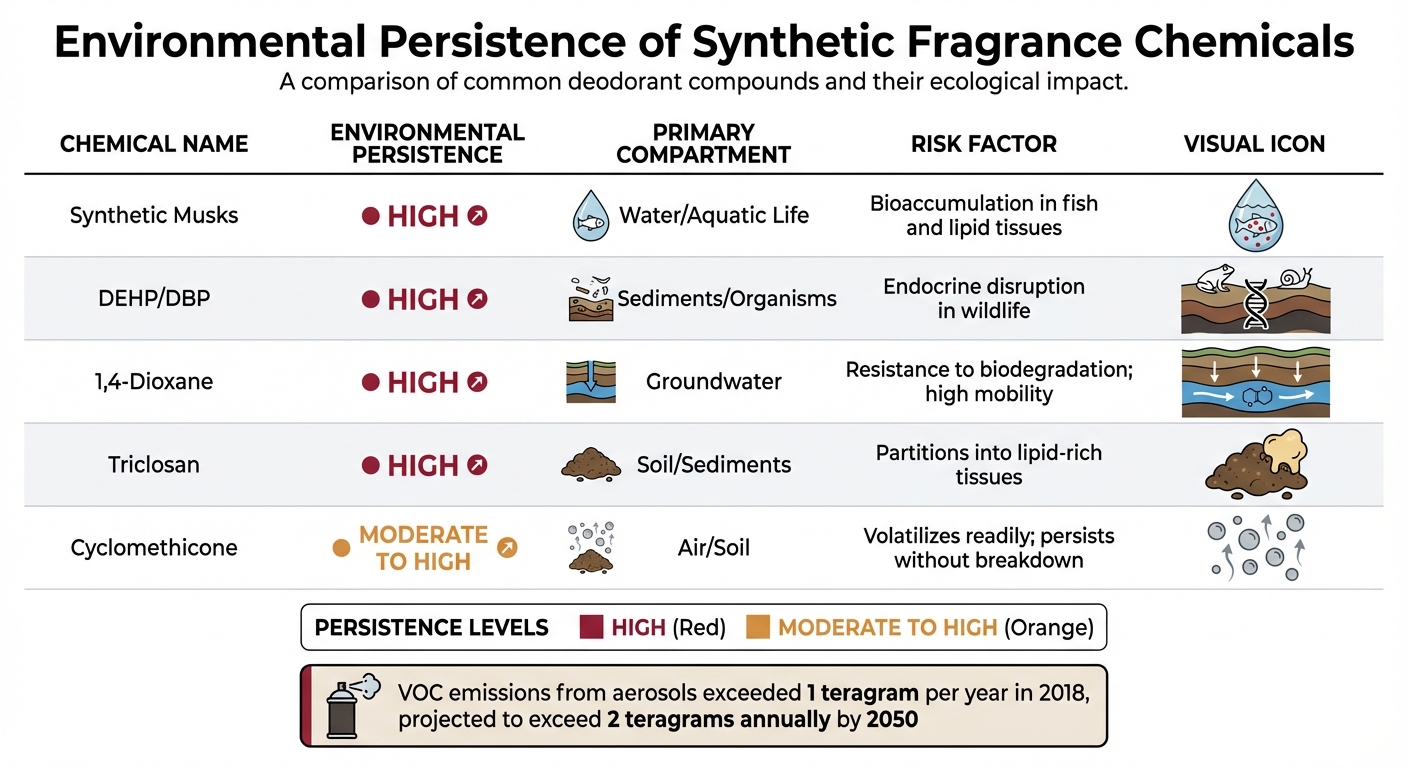
Environmental Persistence and Risk Factors of Common Synthetic Fragrance Chemicals
Synthetic fragrances don’t just affect human health - they also have lasting impacts on ecosystems. Unlike natural ingredients that break down over time, many synthetic compounds are designed to persist, allowing them to remain in the environment for years. This persistence leads to pollution in waterways and bioaccumulation in food chains.
Water Pollution
Synthetic fragrance chemicals often end up in water systems through industrial waste and everyday use [4] [11]. When you wash off products like deodorant, these chemicals travel down the drain and enter wastewater treatment facilities. Unfortunately, many of these compounds resist standard treatment methods, slipping through and contaminating rivers, lakes, and oceans [4] [11].
Synthetic musk components are a prime example, as they pollute aquatic environments and remain in ecosystems for extended periods [4] [11]. Among common deodorant ingredients, about 19 compounds, including Diethyl phthalate, Linalool, and Eugenol, have high water solubility, making them prone to entering water systems [4]. Studies have shown that 70% to 90% of Diethyl phthalate often remains in the water column instead of settling into sediments [4].
Certain chemicals, like those with high octanol–water partition coefficients, tend to sink into aquatic sediments, while others, such as 1,4-Dioxane, are highly soluble and migrate into groundwater. These substances resist biodegradation, exposing fish, plants, and other aquatic organisms to long-term contamination. The persistence of these pollutants in water systems creates a chain reaction, as they accumulate in living organisms and disrupt ecosystems.
Chemicals That Don't Break Down
Synthetic fragrance compounds are often referred to as "emerging pollutants" due to their persistence, tendency to accumulate, and ability to transform in the environment [12]. Unlike natural essential oils that decompose, synthetic molecules are engineered to endure, making them environmental hazards.
Approximately 50% of deodorant-related compounds have a Log Kow between 2 and 5, which allows them to bioaccumulate in the fatty tissues of organisms and climb up the food chain [4]. For instance, emissions of volatile organic compounds (VOCs) from aerosols like deodorants and perfumes surpassed 1 teragram per year in 2018, with projections suggesting they could exceed 2 teragrams annually by 2050 [12].
| Chemical | Environmental Persistence | Primary Compartment | Risk Factor |
|---|---|---|---|
| Synthetic Musks | High | Water/Aquatic Life | Bioaccumulation in fish and lipid tissues |
| DEHP / DBP | High | Sediments/Organisms | Endocrine disruption in wildlife |
| 1,4-Dioxane | High | Groundwater | Resistance to biodegradation; high mobility |
| Triclosan | High | Soil/Sediments | Partitions into lipid-rich tissues |
| Cyclomethicone | Moderate to High | Air/Soil | Volatilizes readily; persists without breakdown |
"Synthetic musk components pollute streams and aquatic life and are persistent in the environment." - Meenakshi Kakara, Department of Civil Engineering, Mahindra University [4]
These chemicals rarely stay confined to their original location. Many are classified as "multiple hoppers", meaning they can travel long distances through air or by attaching to atmospheric particles [4]. Even when they evaporate, these chemicals interact with ozone and hydroxyl radicals, producing harmful secondary pollutants like formaldehyde and ultrafine particles [12]. Their environmental impact extends far beyond their initial release, creating widespread challenges for ecosystems.
Natural Alternatives to Synthetic Fragrances
Considering the potential risks tied to synthetic fragrances, natural options provide a safer and more thoughtful choice. These plant-based solutions not only smell great but also skip the harmful chemicals often found in synthetic counterparts.
Essential Oils and Plant-Based Scents
Fragrances derived from plants are crafted through methods like pressing, extraction, or distillation. These sources include essential oils, plant isolates, extracts, and resins.
Essential oils do more than just smell pleasant - they often contain antimicrobial properties that combat odor-causing bacteria. For example, Tea Tree oil features terpinen-4-ol, a compound that disrupts bacterial cell membranes. Similarly, Lavender, Eucalyptus, and Lemon essential oils offer fresh scents while providing soothing benefits. Certified Aromatherapist Annie Mascia highlights this dual functionality:
"Essential oils such as Lavender, Tea Tree, Cypress, and Lemon can not only help you smell your best, but more importantly, inhibit the growth of odor-causing bacteria on the skin." [13]
In addition to essential oils, many natural deodorants include ingredients like plant powders and probiotics. Magnesium hydroxide, for instance, creates a high pH environment that discourages bacterial growth while being gentler on the skin than baking soda. Other components, such as arrowroot powder and cornstarch, naturally absorb moisture, and some formulations even incorporate probiotics to promote a healthy underarm microbiome.
These plant-based fragrances are biodegradable and renewable, which helps reduce their environmental footprint. Opting for natural alternatives also contributes to lowering volatile organic compound (VOC) emissions, which reached approximately 1 teragram in 2018 and are expected to double by 2050 [2].
Beyond their ecological benefits, these options also minimize the likelihood of triggering allergies or skin sensitivities, as discussed below.
Fewer Allergies and Better Skin Tolerance
Natural fragrances aren’t just kinder to the planet - they’re often gentler on your skin. Unlike synthetic fragrances, which are a common cause of allergic contact dermatitis, especially in sensitive areas like the underarms [9], plant-based options are less likely to provoke reactions. Many conventional products use the term "fragrance" to conceal a mix of undisclosed chemicals, but natural deodorants typically list essential oils clearly, offering transparency that helps users avoid potential irritants.
For those with sensitive skin, modern formulations often replace baking soda with magnesium hydroxide, which provides effective odor control without the irritation baking soda can cause. When transitioning from conventional antiperspirants, it’s normal to experience a 1–2 week adjustment period as your body adapts to sweating naturally [14].
Finding the right natural deodorant might take some trial and error. These products work best when applied to clean, dry skin, and some may perform better when massaged in for full absorption. With a variety of options available across different price points, there’s likely a natural solution that fits your skin type and budget.
Elemental Deodorant: A Natural Solution for Healthy, Sustainable Living

Elemental Deodorant offers a thoughtful approach to personal care by focusing on natural ingredients and transparent practices. Its design aligns with both health-conscious and environmentally aware lifestyles.
Safe and Transparent Ingredients
Instead of relying on synthetic fragrances, which can include over 3,500 different chemicals hidden under terms like "fragrance" or "parfum" [1], Elemental Deodorant takes a clear and natural approach. Its formula features plant-based ingredients that prioritize both effectiveness and skin health.
Key components include magnesium hydroxide, which combats odor-causing bacteria without irritating the skin. Witch hazel provides a soothing touch, while essential oils like lavender, tea tree, and eucalyptus not only smell great but also offer antimicrobial properties.
By steering clear of phthalates, parabens, and aluminum, the deodorant avoids endocrine disruptors that may interfere with hormone function or impact reproductive and metabolic health [15][8]. This formula works with your body’s natural processes to manage odor for up to 24 hours, all while supporting your skin’s natural detoxification and cooling mechanisms.
Environmentally Conscious Packaging
Elemental takes an innovative step toward reducing waste with its refillable glass containers and biodegradable refills. These features tackle the environmental challenges associated with conventional deodorants and their synthetic packaging.
The sturdy glass bottle is designed for repeated use, eliminating the cycle of single-use plastics. When it’s time for a refill, customers simply order biodegradable pods that naturally decompose after disposal. This thoughtful system minimizes plastic waste while maintaining the quality and convenience users expect.
Ethical, Gentle, and Effective
Elemental Deodorant is both vegan and cruelty-free, appealing to those who value ethical choices in their products. Designed with sensitive skin in mind, the formula avoids common irritants found in many traditional deodorants, ensuring effective protection without discomfort.
Each batch is handcrafted to uphold quality standards and contains no artificial colors or synthetic fragrances. For the best results, apply the deodorant to clean, dry skin and massage it in thoroughly to ensure even coverage and long-lasting performance.
Conclusion: Making the Switch to Natural Deodorants
Synthetic fragrances often conceal over 3,500 chemicals under vague labeling [1]. These hidden compounds can lead to skin irritation, respiratory problems, and hormone disruption [15]. Beyond personal health, they also contribute to air and water pollution [3].
Natural deodorants offer a safer alternative. Ingredients like essential oils provide odor control without relying on undisclosed chemicals. Formulations using magnesium hydroxide and plant-based components work harmoniously with your body, delivering long-lasting protection while promoting skin health.
"Fragrance chemicals aren't benign – exposure to them can lead to a range of health problems. They can disrupt the hormone system." - Environmental Working Group (EWG) [1]
Elemental Deodorant stands out as a prime example of safe and sustainable personal care. Its transparent, natural formula comes in refillable, biodegradable packaging, addressing both health concerns and plastic waste [3]. By avoiding endocrine disruptors and focusing on effective protection, it proves that safety and performance can coexist.
Switching to natural deodorants is a step toward better health and a cleaner planet. Allow your body one to two weeks to adjust [15]. Make informed choices by reading labels, using tools like EWG's Skin Deep database [1][16], and selecting brands that emphasize ingredient transparency. A healthier you and a healthier environment go hand in hand with this simple change.
FAQs
Why should I avoid synthetic fragrances in deodorants?
Synthetic fragrances in deodorants often come with hidden risks. Many contain volatile organic compounds (VOCs) and other chemicals that can irritate the skin or affect the respiratory system. Common issues include headaches, allergic reactions, and throat irritation, with the potential to aggravate conditions like asthma. Some of these chemicals have even been associated with more serious, long-term concerns, including hormone disruption and cancer.
What makes this even trickier is that manufacturers aren't always transparent about the ingredients in synthetic fragrances, leaving consumers unaware of what they’re applying to their bodies. Choosing natural deodorants that avoid synthetic fragrances is a simple way to reduce exposure to these risks and support healthier choices.
What are the environmental risks of synthetic fragrances?
Synthetic fragrances can have a harmful impact on the environment. Many of these fragrances are made with chemicals that don’t break down easily, allowing them to linger in ecosystems and contribute to long-term pollution. They also emit volatile organic compounds (VOCs), which can worsen both indoor and outdoor air quality. Shockingly, the VOC emissions from scented products sometimes rival those produced by vehicles.
When synthetic fragrances go down the drain, the problem doesn’t end there. These chemicals can build up in waterways, harming aquatic life and upsetting delicate ecosystems. Since the chemical formulas of many synthetic fragrances are often undisclosed, it’s challenging to fully grasp their environmental effects. However, studies have shown they can contaminate soil and water, threatening wildlife and biodiversity. Opting for natural, eco-conscious alternatives is a step toward minimizing these environmental risks.
What makes natural deodorants better than synthetic ones?
Natural deodorants bring notable benefits for both personal well-being and the planet. Unlike synthetic options, which often include ingredients like aluminum, parabens, and synthetic fragrances, natural deodorants rely on plant-based components such as magnesium, essential oils, and coconut oil. These ingredients help neutralize odor while allowing your body to sweat naturally, which can lower the chances of skin irritation and steer clear of chemicals linked to potential health risks.
On top of that, many natural deodorants come in packaging designed with the environment in mind, such as recyclable or biodegradable materials, cutting down on waste. Opting for natural deodorants means choosing healthier skin, reducing chemical exposure, and contributing to a cleaner, greener planet.