


When choosing natural deodorants, it's easy to assume "natural" equals safe. But even plant-based ingredients can trigger irritation or allergies in sensitive skin. Here are the top 5 allergens often found in natural deodorants and how they affect your skin:
- Baking Soda: Effective for odor control but disrupts skin's natural pH, causing irritation or rashes.
- Essential Oils: Popular for fragrance and antibacterial properties but can lead to redness, itching, or even blistering, especially in sensitive individuals.
- Fragrance Components: Even "naturally scented" products may include compounds like geraniol or eugenol that trigger allergic reactions.
- Plant Butters and Waxes: Shea butter, coconut oil, and beeswax moisturize but can cause allergic reactions or clogged pores in some users.
- Absorbent Powders: Ingredients like cornstarch or kaolin clay help reduce wetness but may irritate sensitive skin.
Key Takeaway: Natural doesn’t always mean irritation-free. Always patch test new products, especially if you have sensitive skin or conditions like eczema. Look for baking soda-free, fragrance-free options with gentler ingredients like magnesium hydroxide or witch hazel.
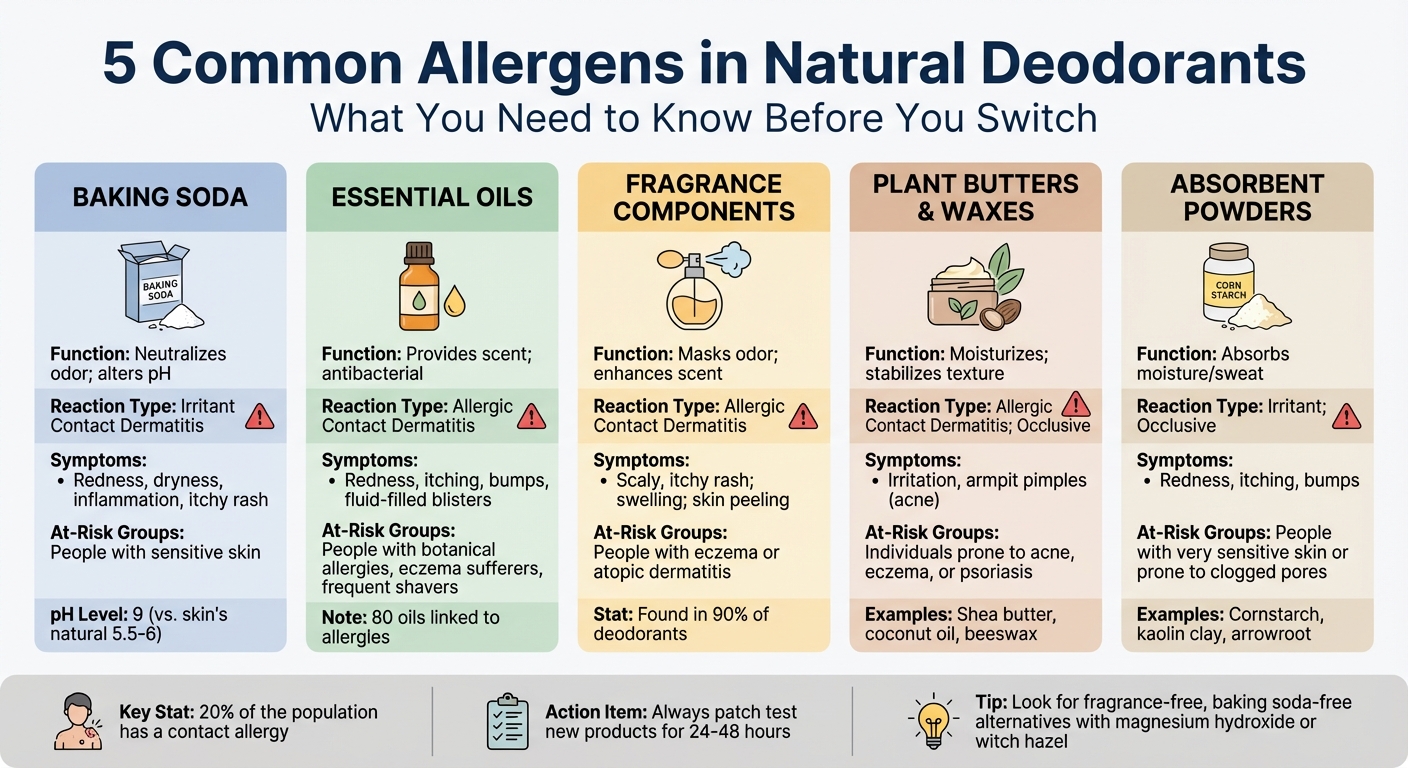
5 Common Natural Deodorant Allergens: Symptoms, Reactions, and Risk Groups
1. Baking Soda
Role in Deodorants
Baking soda, or sodium bicarbonate, is a common ingredient in natural deodorants. It works by neutralizing odor-causing bacteria, creating an alkaline environment that makes it difficult for these microbes to thrive [2][7]. Additionally, it helps absorb moisture, which can keep underarms feeling dry [7][9].
Type of Reaction: Irritant vs. Allergic
The reactions caused by baking soda are typically irritant in nature. Its high pH level, around 9, disrupts the skin's natural acidic barrier, which normally has a pH of 5.5 to 6 [2][6]. This disruption can lead to irritant contact dermatitis. Occasionally, baking soda may also trigger a delayed allergic reaction, though this is less common [2][9].
"The biggest irritation culprits is baking soda. It actually has to do with pH: Baking soda has a basic pH; your armpits have an acidic. Combining the two causes irritation, as your acid mantle is a vital part of the skin barrier." - Alexandra Engler, Senior Beauty & Lifestyle Director, mindbodygreen [6]
Common Symptoms
If your skin reacts poorly to baking soda, you might experience redness, severe itching, or a burning sensation shortly after using a deodorant containing it [2][6][9]. Prolonged exposure to irritation can sometimes lead to hyperpigmentation, causing the affected area to darken [2][9]. While irritant reactions usually happen immediately or within a few hours, allergic reactions can take up to 24 to 48 hours to appear [3][9].
Who’s More at Risk?
People with naturally sensitive skin or conditions like eczema or psoriasis are more prone to react to baking soda [3][9]. Shaving can also make the skin more vulnerable, as freshly shaved underarms have tiny openings that allow the alkaline ingredient to penetrate deeper, increasing the likelihood of irritation [9]. For those who experience consistent issues, switching to baking-soda-free deodorants with gentler ingredients like magnesium hydroxide or zinc oxide may provide relief [2][7][6].
Next, we’ll take a closer look at how essential oils impact sensitive skin.
sbb-itb-18dae44
2. Essential Oils
Function in Deodorant
Essential oils play a dual role in natural deodorants. They work as antimicrobial agents, targeting odor-causing bacteria, while also adding a pleasant fragrance to mask body odor. Popular choices include tea tree oil for its antibacterial properties, lavender for its soothing aroma, and lemongrass, which combines a fresh scent with bacteria-fighting abilities. However, these benefits come with a downside - essential oils are a common trigger for skin allergies. Despite their "natural" appeal, these concentrated plant extracts can irritate sensitive skin or cause allergic reactions.
"Poison ivy is all natural. Although considered safer, natural fragrance additives like oil of bergamot are known for being common triggers of allergic reactions." - Dr. Rajani Katta, Dermatologist
Type of Reaction
Essential oils can cause two main types of skin reactions:
- Irritant contact dermatitis: This occurs when the oils damage the skin barrier, leading to immediate discomfort like stinging or burning.
- Allergic contact dermatitis: This is a delayed immune response that can appear 24 to 48 hours after application.
Citrus-based oils, such as bergamot, lemon, and lime, add another layer of risk due to phototoxicity. If these oils are applied and the skin is exposed to sunlight, severe reactions like blistering can occur [14]. In fact, around 80 essential oils have been linked to contact allergies, and approximately 1 to 4% of the population has a fragrance allergy [11].
Typical Symptoms
If your skin reacts poorly to essential oils, you might notice redness, itching, swelling, peeling, or bumps. In some cases, fluid-filled blisters may form, resembling a poison ivy rash. While irritation is usually limited to the underarms, allergic reactions can spread to nearby areas.
High-Risk User Groups
Certain groups are more prone to reactions from essential oils:
- People with eczema or atopic dermatitis: Their weakened skin barrier makes it easier for allergens to penetrate.
- Frequent shavers: Shaving creates tiny cuts, making the skin more vulnerable to irritation or allergic responses.
- Women and older adults: These groups are more likely to develop sensitivities over time.
- Professionals exposed to essential oils: Aromatherapists, massage therapists, hairdressers, and beauticians face higher risks due to prolonged exposure.
To minimize the risk, consider performing a patch test before trying a new deodorant containing essential oils. Apply a small amount to your inner wrist or elbow, and wait 24 to 48 hours to monitor for any delayed reaction. Up next, we'll explore other allergenic components found in natural deodorants.
3. Fragrance Components in "Naturally Scented" Deodorants
Function in Deodorant
Fragrances play a dual role in natural deodorants: they help mask body odor and make the product more appealing. Interestingly, about 90% of all deodorants include some form of fragrance [4]. While essential oils, as discussed earlier, can provide scent along with antimicrobial properties, many naturally scented deodorants also rely on isolated fragrance components like geraniol, eugenol, hydroxycitronellal, farnesol, and citral to craft specific scent profiles [1][8]. However, these complex blends can make it harder to identify which ingredient might trigger a reaction. Though these additives enhance the product's appeal, they can also cause responses similar to those from other natural ingredients.
Type of Reaction
Fragrance components bring their own set of risks, often leading to two types of skin reactions: immediate irritant contact dermatitis or delayed allergic reactions that appear 24 to 48 hours later [3]. If you've had previous reactions, your chances of developing fragrance allergies increase [4]. Research highlights deodorants as a top cause of fragrance allergies, especially among men [3].
"Fragrances are the most prevalent allergen in deodorant. One Danish study found that deodorants were the leading cause of fragrance allergy, especially for men."
- Dr. Ari Zelig, Allergist and Immunologist, Charleston ENT and Allergy [3]
Typical Symptoms
The symptoms caused by fragrance components are very similar to those triggered by essential oils. These include redness, itching, swelling, peeling, and bumps [5][8]. The armpit, being a warm and moist area where skin is often pressed together, allows allergens to penetrate more easily [4][8]. For those using spray deodorants, the aerosolized fragrance vapors can also cause respiratory issues, such as coughing or shortness of breath, particularly in individuals with asthma or allergic rhinitis [1][5].
High-Risk User Groups
Certain groups are more prone to fragrance-related reactions. Studies suggest that men face a higher risk of developing fragrance allergies from deodorants [3]. Additionally, individuals with respiratory conditions like asthma or allergic rhinitis may experience breathing difficulties when exposed to these volatile compounds [1][5]. It's also worth noting that standard patch tests only detect about 60% to 75% of fragrance sensitivities, meaning a negative test result doesn’t guarantee you’re in the clear [4][8]. If you're concerned, pay close attention to labels - products marked "unscented" may still contain masking fragrances to neutralize other ingredient odors. Instead, look for options labeled "fragrance-free" to minimize risks [1][3].
4. Plant Butters, Waxes, and Botanical Extracts
Function in Deodorant
Plant-based ingredients play several key roles in natural deodorants. Butters like shea, cocoa, and mango provide a creamy texture while keeping the underarm skin moisturized [2][13]. Coconut oil does more than just hydrate; its fatty acids actively combat odor-causing bacteria [16]. Waxes, such as beeswax and candelilla wax, give deodorant sticks their solid form and ensure smooth application by creating a protective layer. Vitamin E acts as a natural antioxidant, preventing oxidation and extending shelf life. Meanwhile, botanical extracts such as Arnica montana and lichen acid contribute antioxidant and skin-repairing properties. However, despite their benefits, these ingredients can occasionally lead to delayed allergic reactions.
Type of Reaction
While these ingredients are nourishing, they can sometimes cause Allergic Contact Dermatitis (ACD), a delayed immune response that usually appears 24 to 48 hours after exposure [15][3]. Unlike immediate irritation caused by certain ingredients like baking soda, allergic reactions to botanicals develop over time as the immune system reacts to specific substances. Research indicates that about 20% of the population has a contact allergy [15], with individuals who have atopic dermatitis being more vulnerable due to their compromised skin barrier [3][4]. These delayed reactions can manifest in a variety of symptoms.
Typical Symptoms
Symptoms of ACD often include a red, scaly, and itchy rash in the underarm area. In some cases, affected skin may peel, develop bumps, or, in severe instances, form fluid-filled blisters [5]. A case study from Ohio State University in September 2008 highlighted a 42-year-old man with recurring underarm dermatitis. Patch testing revealed strong allergic reactions (2+ to 3+) to several botanical extracts like Arnica montana, tea tree oil, ylang-ylang oil, Lavender Absolute, and a lichen acid mix. Following Dr. Matthew J. Zirwas's recommendation to switch to a fragrance-free regimen, the patient's skin issues resolved [4].
High-Risk User Groups
Some individuals are more prone to these reactions and should exercise caution. Those with eczema or atopic dermatitis are at higher risk [3][13]. People with a history of fragrance allergies are 2.4 times more likely to react to scented natural deodorants [4]. Additionally, shaving the underarms can increase the risk by making the skin more absorbent to allergens [15][5]. To minimize the chance of a reaction, performing a patch test before use is highly recommended. Ultimately, avoiding known triggers remains the most effective way to prevent contact dermatitis [3].
5. Absorbent Powders and Starches
Role in Deodorants
Absorbent powders and starches play a key role in natural deodorants by managing moisture levels, offering an alternative to aluminum-based compounds commonly found in traditional antiperspirants [2][12]. Instead of blocking sweat glands, these ingredients work by soaking up moisture from the skin's surface. This helps reduce wetness and slows the growth of odor-causing bacteria. Popular options include arrowroot powder, cornstarch, kaolin clay, and diatomaceous earth. Dr. Marc Meth, MD, FACAAI, FAAAI, highlights their importance:
"Natural deodorant options use ingredients like essential oils, baking soda, and cornstarch to keep your underarms dry" [17].
However, like other natural deodorant ingredients, powders and starches can sometimes lead to skin reactions.
Potential Skin Reactions
These ingredients may cause two types of skin reactions: immediate irritation or delayed allergic responses [3]. Irritant reactions happen quickly, causing stinging or burning sensations upon application. Allergic reactions, on the other hand, may take 24–48 hours to appear [3].
Common Symptoms
Skin reactions to absorbent powders can result in itchy, red patches, swelling, and peeling in the underarm area. In some cases, the skin may flake or scale, and more severe symptoms like blisters or hives can develop. These issues can persist for up to eight weeks after discontinuing the product [10][18]. Dermatologists recommend a two- to three-week elimination trial to determine if symptoms improve after stopping the use of the product [3]. These reactions emphasize the importance of choosing products carefully.
Who Is Most at Risk?
People with sensitive skin or conditions like atopic dermatitis face a higher risk of adverse reactions due to their compromised skin barrier [3]. Shaving can further increase vulnerability by creating tiny openings in the skin, which allows ingredients to penetrate more easily. Applying deodorant right before or after shaving adds to this risk [3][5]. The underarm area is particularly prone to irritation because it has a weaker barrier function, faster skin cell turnover, and different lipid levels compared to other parts of the body [15].
To reduce the likelihood of a reaction, it’s wise to perform a patch test before trying a new deodorant. Apply the product to a small area, like the inner elbow or wrist, and wait 24 hours to check for any signs of irritation [2]. Taking this simple step can help ensure the product is a good fit for your skin.
Say Goodbye To Deodorant Rash! Learn The Causes And Treatments Here
Quick Reference: Allergen Comparison Table
Here’s a handy table that breaks down the top five allergens, their roles, types of reactions they may cause, common symptoms, and who might be most at risk.
| Allergen | Function | Reaction Type | Common Symptoms | Risk Groups |
|---|---|---|---|---|
| Baking Soda | Neutralizes odor; alters pH [7] | Irritant Contact Dermatitis [2] | Redness, dryness, inflammation, itchy rash [2][9] | People with sensitive skin [7][9] |
| Essential Oils | Provides scent; antibacterial [7][9] | Allergic Contact Dermatitis [8] | Redness, itching, bumps, fluid-filled blisters [5][9] | People with botanical allergies [5] |
| Fragrance Components | Masks odor; enhances scent [4] | Allergic Contact Dermatitis [3][4] | Scaly, itchy rash; swelling; skin peeling [3][5] | People with eczema or atopic dermatitis [3] |
| Plant Butters & Waxes | Moisturizes; stabilizes texture [7][9] | Allergic Contact Dermatitis; Occlusive [4][9] | Irritation, armpit pimples (acne) [9] | Individuals prone to acne, eczema, or psoriasis [9] |
| Absorbent Powders | Absorbs moisture/sweat [2][7] | Irritant; Occlusive [2][9] | Redness, itching, bumps [5] | People with very sensitive skin or prone to clogged pores [9] |
This table provides a quick overview to help you make thoughtful choices for sensitive skin. It’s worth noting that fragrance, present in 90% of deodorants, is the most common allergen. Additionally, having a history of rashes can double your likelihood of developing a fragrance allergy [4].
Conclusion
For those with sensitive skin, knowing which ingredients might cause reactions is crucial. The underarm area is particularly delicate due to its thin, folded, and often damp skin - conditions that make it easier for allergens to penetrate and cause irritation [9]. Identifying common irritants is a vital step in choosing products that maintain your skin's natural balance. As Dr. Michael Nevid from National Jewish Health explains, "The overall message with contact dermatitis is to try to avoid triggers. It's the ultimate treatment." [3]
Pay close attention to ingredient labels, as terms like "hypoallergenic" or "natural" can be misleading - they aren't federally regulated and don't guarantee safety [1]. The U.S. Food and Drug Administration emphasizes: "The best way to prevent an allergic reaction is to know what you are sensitive to and how to avoid it. One way to accomplish this is by carefully reading the product ingredient panel." [1]
When selecting a deodorant, look for formulations that replace harsh ingredients with gentler options. For instance, magnesium hydroxide helps maintain a pH closer to your skin's natural range of 5.5–6.5, unlike baking soda, which has a pH of 9 [2][7]. Witch hazel, a natural astringent, reduces sweating without clogging pores [16].
Elemental Deodorant is crafted specifically for sensitive skin, featuring magnesium, witch hazel, and organic ingredients. It avoids synthetic fragrances, parabens, and phthalates while delivering 24-hour odor protection. This formula directly addresses the common allergens highlighted in this article, offering a safer choice for those prone to irritation.
Before incorporating any new product into your routine, perform a patch test on your inner wrist or elbow to check for compatibility [2][5]. Taking this small step can help establish a safer and more mindful approach to managing natural deodorant use.
FAQs
How can I tell if I'm allergic to ingredients in natural deodorant?
If you notice redness, itching, swelling, a burning feeling, or tiny blisters under your arms after using natural deodorant, you might be dealing with an allergic reaction. Common culprits include baking soda, essential oils, magnesium-based ingredients, or preservatives. These symptoms can show up quickly - sometimes within minutes - or take a few hours to appear, and they may linger for several days.
To figure out if an allergy is the issue, stop using the deodorant and see if your skin improves. You can also do a simple test by applying a small amount of the product to your inner forearm and watching for any reaction. For a more precise answer, a dermatologist can perform a patch test to pinpoint the exact allergen.
If you have sensitive skin, switching to a milder option might be the solution. For example, Elemental Deodorant skips harsh ingredients like baking soda and instead uses gentle alternatives like organic magnesium and witch hazel, offering effective odor protection without irritation.
What are some skin-friendly alternatives to common allergens in natural deodorants?
When looking for natural deodorants, it’s important to consider safer options that avoid common irritants like baking soda, synthetic fragrances, and certain essential oils. Instead, focus on gentle ingredients that work effectively without upsetting your skin.
For instance, witch hazel is a great alternative to alcohol-based formulas, offering mild astringent properties without the harshness. To manage moisture, ingredients like arrowroot powder, cornstarch, or kaolin clay do the job without the gritty feel of baking soda.
For odor control, magnesium-based compounds such as magnesium hydroxide are a solid choice, especially for those with sensitive skin. And let’s not forget coconut oil - it provides natural antimicrobial benefits while also being soothing, making it a perfect base for anyone prone to irritation. Opting for deodorants with these thoughtful ingredients lets you stay fresh and comfortable without compromising your skin’s well-being.
Why can natural deodorants cause skin irritation even though they’re labeled as 'natural'?
Natural deodorants can still irritate the skin, largely because the term "natural" isn’t strictly defined or regulated. This means products labeled as such can include ingredients that may not be ideal for sensitive skin. Two common offenders are baking soda and essential oils. Baking soda, with its high pH, can disrupt the skin’s natural barrier, leading to redness or irritation. Essential oils, while often used for their pleasant scent, contain compounds like limonene and linalool, which can trigger allergic reactions in some people.
Interestingly, these irritants don’t stem from the absence of aluminum or synthetic chemicals but rather from the natural ingredients themselves. For instance, essential oils, despite their appealing fragrance, are highly concentrated and can provoke immune responses in sensitive individuals. Similarly, baking soda, often added for odor control, can cause itching or rashes due to its alkalinity.
If your skin tends to react easily, Elemental Deodorant offers a thoughtful alternative. It’s aluminum-free and crafted with gentle ingredients like magnesium and witch hazel. By skipping baking soda and common fragrance allergens, it’s designed to keep sensitive skin calm and comfortable.
Related Blog Posts
- 7 Natural Ingredients That Make Aluminum-Free Deodorant Work
- Natural vs Chemical Deodorants: Understanding the Differences
- Sensitive Skin? Natural Deodorant Solutions That Work
- 5 Myths About Natural Deodorants